Showing posts with label self-diagnosing. Show all posts

Monday, March 7, 2016

Just depression

I responded to another "am I a sociopath?" email two years later and found another young person who would now describe what she was going through at the time as something very different from sociopathy. I asked her to write how her perspective changed over those years:

During most of my teenage years, I was determined to find the crucial component to my personality; a defining factor. Something has to be wrong with me, because no one else seems to have my problems and issues. In 9th grade, I had friends; none close, but people to talk to during class, and see in the halls. I would act differently around all of them... (it wasn't until two years later that I noticed this behavior). When around the cool kids, I'd act cool, when around the nerds, I'd act nerdy, and so on. I'd take on similar personalities, so I could fit in, and have friends. 

Later on I noticed that my emotions were fading away... as if one day I'd wake up and no longer be able to feel a certain emotion. I first noticed it with embarrassment, from my ability to do anything and not feel that emotion from it... I felt fear at the realization that I could potentially lose my emotions and become void. It was until one day that I no longer feared losing my emotions that I realized was a sociopath. I didn't feel empathy or regret... I didn't care who I upset. Albeit I realize it now, just a teenager's desperate attempt at clawing their way into accepting themselves. 

All of this was from depression, that went unnoticed for years. I didn't know that then. I convinced myself, and others, that I was a sociopath, and I lived by it. I didn't allow myself to feel emotion, and that bit me in the butt. In the latter part of my teenage years I sorta, grew out of that pit devoid of emotion... Back then, I wanted to be important and special. A lot of people going through their teenage years experience this with other categories too. I wanted to be the strong one of my family, no emotions to cloud my judgement... pure logic; like a robot. I take this in part that there was no father figure in my family. I felt like I had to be the man. 

That's not me now... I climbed out of the hole I dug myself into by conditioning myself to feel happiness. What I mean by that is, I would do my best to find something to make me happy during my day... It took a while to feel full emotions again but now I'm at the point where it's a normal part of my life. I have learned that with happiness, comes sadness... and to not block either emotion. Emotions are like yin and yang and you cannot have one without the other. 

Mental health is not self-diagnosis, mental health is accepting your personality for what it is... if you are normal, average... that's okay. I had to learn that. Also of course, seeing a therapist helps, which is what I did to get my anxiety under control. Now, I will be driving down the road and I'll smile at a bright blue day, and I'll smile at a gloomy rainy day. Both are beautiful to me, because contrast is good. 

The whole period where I thought I was a sociopath is not something I'm proud of. It's a little embarrassing because I genuinely believed it. and now I know how stupid it was. Let this be a lesson to all.

Sunday, February 14, 2016

Probably puberty

I've been trying to get to some of my very old backlog of emails from almost two years ago. It's interesting because most people no longer care about whatever they wrote me about (e.g. my sociopath boy/girlfriend/boss/ex/parent/etc.) Some of the most interesting replies, however, are coming from people who wondered if they weren't a little sociopathic themselves. (By the way, I have stopped opining myself on this question from people -- I don't feel like I'm anywhere near a credible source, but I realize that most people who ask me do not have access to professional psychological help so I figure we can try to help a little by crowdsourcing our experiences. I know some of you hate those posts. Sorry, but as long as I think it helps people to figure things out even just a little bit, I'll probably keep posting them, as it is literally the least I could do. Compromise? You can skip reading them and I promise I won't have my feelings hurt?)

Probably not surprising to most, there's a good portion of these am-I-a-sociopath people that no longer wonder because they no longer experience those tendencies. To put it perhaps too broadly, it was just phase. I actually have been enjoying hearing back from these people because I think it helps put things in perspective for those people who are currently where they were almost two years ago.

For example, from a reader in answer to my question if he would still like a substantive reply from me:

Haha no it's all good. Long time passed, lessons learned. To be honest, I just wanted to be different and the label of sociopath was a good excuse at the time. I realized that I'm not a sociopath, I'm simply amazed by the sociopathic type. I learned that I'm fixated with welcoming the unknown. I find a melancholic beauty in things considered taboo, immoral, dark, forbidden and sadistic (such as death and dying). Even though a sum of people consider me to be a source of emotional comfort (I get really deep really fast and find out things, that some people tell me they don't tell people), I enjoy watching people suffer in almost anyway possible but! It tends to be a win win thing. so what I'm doing isn't considered wrong even though sometimes I do question my own motives but! You don't need to be a sociopath to feel comforted by death. But thank you kindly for replying haha I'm a little surprised that you did

PS. I'm in the process of acquiring a degree in psychology (feel free to tell me to fuck off, feel free to not reply) but if I ever have to write a paper on sociopaths, mind if I send you some non-relative to this conversation questions?

PPS. It probably was puberty.

Good luck to all of you out there trying to figure it out. 

Wednesday, January 15, 2014

Being told you're a sociopath (part 2)

(cont.)

As I asked myself these things, another realization came to me.

I was born with severe astigmatism. We know now, that I hadn’t been able to see much of anything for the first years of my life. But back then, nothing was out of the ordinary. I thought I was perfectly normal and so did the people around me. It wasn’t until I started reading, writing, and watching TV. My parents noticed how I would sit right up to the screen, and burry my nose in the paper to read or write. Still, I was completely oblivious. My world was the blur that it had always been. Then, one day, my mom picked me up early from school and said we were going to the doctors. On the way, she asked me if I could see. I told her that of course I could. She stopped by a red octagonal sign and asked me to read what it said. I told her it didn’t have any words on it.

I got glasses a week later and I’ve been wearing them ever since.

The point was that I didn’t know what my mother meant when she asked me if I could see before I got to wear glasses and truly see the world for the first time. I didn’t think that the world could be anything other than what my eyes had always told me it was. Nothing could have suggested otherwise because I had no idea what the word “see” really meant.

Which is what I think happened with the word “sociopath.” How could I have connected the dots and seen such a thing in me if the word had no meaning for me? Only now, years later, do I look back and laugh at all the times I would get into social pitfalls and awkward situations because I had no clue what was wrong with the people around me. I see now it was me. I would focus, like you, on all those little moments when I had convinced myself I was normal. Back then it was the world that was different and full of crazies.  

Reading your book was like a revelation. That mask of normalcy you speak of, only now do I realize how hard, how draining it had been to keep up pretenses for so long! But because I had never really considered it a mask at all, having it fall now became this boulder crashing off my shoulders. Every smile, every forced emotion, was like I was trying to pick up that boulder and toss it back on me.

Granted, I’ve been slowly getting my game face back on. It’s been getting easier to regress into the comfortable routine I had so mindlessly gone through for years, but I know I can never be the same. Just like seeing the world through glasses for the first time, clear and definite, I have now seen behind the curtain of my own self-deception.

Whether an actual doctor will diagnose me as a sociopath I don’t think I will ever know. I have no intention of going to a therapist or talking to someone about this and, even if I am ever forced to, I’ll lie my way out of it with a clean bill of health.

The only person that will probably ever hear this story, or know what I have gone through for the last few months, is you. I had to tell someone, and you were the only one I knew I could tell. I don’t need confirmation from you about what I am, although your opinion would be much valued. Like I said in the first paragraph, just a reply would be nice so I know you are real and not just a book and a website.

It's interesting how similar this story is to my own story and others that I have heard. The first time I really thought about what the word sociopath meant, I was in my early twenties. I was doing a summer internship with someone who became a fast friend. It was very similar to the class about Evil -- she was very interested in theology and Mormonism, so I told her all of my opinions on morality and she told me I really should consider the likelihood that I was a sociopath. When I looked up what the word meant, I immediately recognized certain aspects about me, but there were other things that didn't seem to quite fit. I didn't really identify with the label right away, or at least I had my doubts. In the five years or so after that informal diagnosis and before my official diagnosis, however, I became better able to assess not just my own behavior, but to better understand the behavior and motivations of empaths. There were many things I shared in common with empaths, particularly superficial similarities. But I slowly started to realize that even though I often had similar behaviors to empaths, my motives were very sociopathic. And seeing things in that way was very similar to having my vision of myself and others suddenly coming into focus. 

Does anyone else have a similar story?

Tuesday, January 14, 2014

Being told you're a sociopath (part 1)

A lot of people ask me, do sociopaths know that they are sociopaths? I have always said yes, or at least that they usually know that they're different even if they're not quite sure what to label that difference. But I also think that young sociopaths often underestimate exactly how different they are from most people. From their perspective, the main differences they notice are how people make irrational emotional choices or how people do not use their brains as efficiently and effectively as the young sociopath does. What they don't necessarily realize is that other people are making similar assessments about them and their behavior. Perhaps other people notice that the young sociopath makes hyper rational choices, or that the young sociopath seems emotionally detached. In other words, young sociopaths often spend much of their time watching and studying the behavior of others, but sometimes they themselves are being observed and classified, perhaps by people that actually know what a sociopath is and are able to identify the observed traits as being sociopathic. I thought this story from a reader was a great illustration of how a sociopath feels about being told they are a sociopath:

I am 18 and an undergraduate freshman, and my story begins when I took a Philosophy class titled EVIL. I took it because it struck me as an interesting way to go about taking care of a GE requirement. And indeed, it was interesting, just not for the reasons I thought it would be….

As we started really dissecting the nature of evil, morality, conscience, guilt and regret, I began to notice things I had previously not even bothered to acknowledge. I began to disagree with my professor's black and white view on many concepts. I began to receive strange looks from classmates who always left the lecture hall with teary eyes and heavy hearts. An older woman sitting next to me eventually confronted me and suggested that I stop commenting to the class as it seemed I was offending her and other people with my, as she put it, “complete soullessness.”

I didn't understand what the big deal was. I had never had any real problems with what I said to people. I could be fun and sarcastic and usually everyone just loved to be around me. And now, for the first time, I felt exactly like an alien failing at disguising herself as a human.

One day, my professor asked me to stay after class. He asked me about my views I had expressed in lecture, so I clarified the way I had always thought of the nature of evil. He went on to ask me about more personal questions, like my attitudes towards friends and family… so on and so forth. For the first time, I didn’t know what to say. No one had ever asked me about my thoughts on these things so I said what I thought was appropriate. Finally, he  asked me if I had any history of mental health or violence. I told him, honestly, that I didn’t as far as I knew.

Then he brought up one word. He asked me if I knew what the word ‘sociopath” meant. At the time, I thought the word only existed in movies and TV dramas. A romanticized adjective to describe the Hannibal Lecters and the Dexter Morgans. As far as I knew, it had no practical meaning in everyday life. I told him as much.   

He confessed that he had been talking about me with one of his psychiatrist friends. It turned out he had actually invited his friend to sit in on a few of the lectures. He said that his friend had confirmed what he had already suspected, that I exhibited some traits of Antisocial Personality Disorder. (He didn’t use sociopathy the second time, but I learned later through research that they mean basically the same thing.) He suggested that I go see the school therapist or immediately seek some other form of professional help.

Hearing that from someone was like having water thrown on my face. I didn’t know what to say, or how to respond, how to act. So I didn’t say anything. I just thanked him for his time, told him I’d consider it, and left. I started doing meticulous research after that I learned that APD or sociopathy was a very real thing… and that the criteria of diagnosis hit very close to home for me.

And that’s when I stumbled across your book.
  
Reading through it opened my eyes in ways I wouldn't have ever guessed were possible. It was exciting and…fascinating, to have this previously fictional world open up to me and suddenly become very real. I wasn’t afraid or that shocked even. I was curious. I had to know more. And your book offered me insight that I wouldn't have never gotten otherwise. I could relate to most of what you wrote. I saw your writing and through it saw myself in a new light.

Which is what brings me to here and now. I don’t know if I really am a sociopath or just messed up in the head. Part of me really doesn't care. I am what I am. Others may have had issue with me in the past but I have never had any problems with myself. However, part of me also can’t help but be suspicious. I can look back at my life and make all the excuses I want for things I barely remember doing but that doesn’t change who I am now. If sociopathy is genetic then I don’t know where I would get it from because no one in my immediate family (that I know of) is anything like me. Is it like a switch, a mutation, a genetic malfunction, that can just happen from time to time? I don’t know.

The only thing I ask myself is how I could have gone through my life without the thought ever even entering my mind. I mean, from your book and from what most research says about this, you should know in your childhood years. But I didn’t have a normal childhood where this would have become immediately apparent. I was off, certainly. I was weird and creepy, sure. But was I really that weird, and that off?

Monday, August 26, 2013

Embracing your place on the sociopath spectrum

I think it's important to remember that most people think that sociopathic traits fall on a spectrum. There's nothing so totally different about a sociopath, it's more the suite of particular traits and the intensity of them that distinguishes them from the typical person. A reader tries to find his own place on the sociopathic spectrum:

I've just finished reading your book, and wanted to thank you for writing it. True honesty, combined with acute self-knowledge, is so rare in any autobiographical work that it's truly a gift when I come across a gem like this.

I suppose I should preface by saying that I'm not exactly sure if I'm a sociopath. I lack some of the characteristics you describe, such as sensation-seeking tendencies and fluid sexuality.

That being said, as I read your book I couldn't help but identify with so many parts of your story. You are basically me, cranked up to eleven. That is, I do seem to possess many of the traits you mention, just to a somewhat lesser degree than you do.

Power is the dominant lens through which I view social relations. I am sometimes scarily confident in my ideas, to the extent that people absorb the philosophies and biases I project almost by osmosis. Then I get sick of them because they've become intellectual carbon copies of "me". I have trouble believing in the concept of love or fixed identity since I have not had the experience of feeling them before - at least not in the sense most people seem to mean them.

Recently I had a dispute with a friend which ultimately ended the relationship. Typically enough, I held all the cards while she engaged in emotional outbursts, but despite the fact that I "won" in the end, I still felt disturbed because this was a relationship I wanted to keep, yet I could not see anything I would have done differently to salvage it.

Somehow, my friend had expected her emotional threats to have an impact on me that was different from what rationality and the balance of power would have suggested. This wasn't the first time something like this had happened, and it made me feel uncomfortable to realise I saw things in a way that was fundamentally different from other people, and that I could not seem to bridge that gap despite my best efforts to consider other strategic paths.

That's when I discovered your book.

I don't know if you realise what a gift you've given to people like me (us?). Reading it was like discovering an oasis in an alien desert. After months of searching for answers in literature, philosophy and even random internet forums and blogs, all of which seemed completely irrelevant to what I was going through, I found your Confessions to be a rare source of solace.

It's incredibly inspiring to read about someone older and more experienced than me, who seems to share the very traits I have, and who has nonetheless managed to create and (even more importantly) maintain a successful life and career.

I used to feel guilty about manipulating people, but more and more, I'm coming to understand its absolute necessity if I am to make my way in this world and achieve my goals. Your book has given me further assurance that this is not only necessary, but could in fact be seen as an ethical, charitable thing to do. If it makes empaths happy to be deceived in certain situations, where's the harm in that? Perhaps my real sin has been in being half-hearted about my schemes, instead of going full bore ahead and ensuring that I get away with them fully. Not just doing the minimum to get by (clumsily), but doing whatever is necessary for a graceful, virtuoso performance.

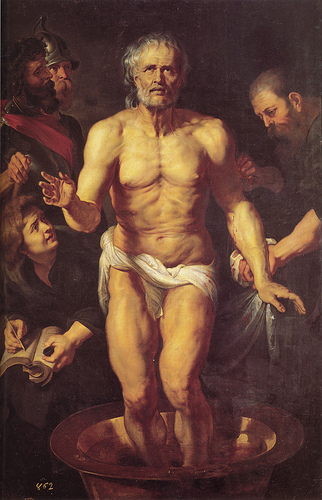
Thank you for casting light on an alternative system of ethics, a way of living life that works for people like me. I felt like I was reading a version of Seneca's "Letters" that was personally addressed to me.

I've never written to an author before, but you struck a chord with me.

Saturday, July 6, 2013

Am I... ?

From a reader:

First of all great blog. I really like that you don't talk about sociopathy, but through it. I find it similar to reading for example Nietzsche - nothing new, but if I find it HERE people must see it differently, it's funny how blind they are.

Moving to main part of this email I feel, that I will screw English terribly ;) If you want to publish it feel free to fix anything that sounds really bad.

I'd like to ask, what would you consider me to be. I tried tests – I always score full points on “lack of feelings and machiavelism” scale while having average score on aggression. On PCL-R I get about 17.
Where to start...
Maybe with what I'm not. I don't like killing animals and never did. Ants, some frogs etc, but not mammals. I don't commit crimes on daily basis and I'm not impulsive. I cheat in any way available and I find it enjoyable, but I didn't steal for fun or anything like it. When I had to fight few times in my life I just turned off anything but anger, so I could aim for eyes and veins, but I it was always a choice and I could stop at any point. I also wouldn’t say I’m fearless, I know that emotion pretty well. That will be it about being normal.

I’m narcissist, but I work on it. It’s like drug and I don’t like anything to control me. I guess you know that nice feeling, when people say how they think, that they know you really well, when they only know mask – or even better feeling, when they tell you, how they can see through your mask and describe another mask as “real you” ;) But the drug part is the only thing that I fight with. I feel better, I don’t think about “difficulty level” when I choose goals and so on.
I play with people. I see them like they were sets of algorithms. I read “Influence” by Cialdini when I was 8-10 year old and I never stopped learning psychology from that point (I’m 21 now). I always could easily imagine how to break someone or how to help him evolve and I find both ways enjoyable – what I care about is how good am I with it. And I am pretty good ;).
I don’t think there is any “real me” behind all that games.
I never felt remorse. I also didn’t feel love, attachment or friendship and I don’t think I fully believe these are real things like people describe them. I know it on cognitive level, that they exist but I just feel like it was some fake. I know happiness, anger, some lust, sorrow(and I think it’s nice),fear/anxiety and flow. Actually, I heard few times that people find it hard to imagine me in any other mood then happy.
I’m also pretty smart. I like math, physics or philosophy and can understand them as well as I can remember lots of biological stuff. At the moment I study three full courses and it’s just fine. I even prefer when I have more to do and I find time pressure fun.

Opinions?

P.S.
There is a book “Psychopaths among us” by Hare. Nothing spectacular, but read part about successful sociopaths. There is also “Time Paradox” by Zimbardo. Basing on what you wrote about your analogy-based world perception I think you will find connecting those ideas enjoyable 

Tuesday, May 14, 2013

Book appendix (part 1)


The book is officially out in North America. To celebrate, I thought I would share some source material that I collected to write the book. This is from an email from the friend who first mentioned the word "sociopath" to me:

I remember when you first walked in the office we shared.  Weren't you wearing flipflops?  I was trying to counsel you on how to behave yourself around the office.    And you gave me my own Book of Mormon with highlighted passages!  We talked religion and ethics a lot at first.  Once I found out you had some attraction for the ladies, we started talking about our personal lives. 

So, as far as my arm-chair sociopath diagnosis goes, I remember the following things:
(1) I would exercise my charm on people around the office, including our boss.  (What was her name? I can't remember anymore.)  You would observe me do this and comment on it. Like, complimentary comments.  I thought about that and the way you watched me, as if you were analyzing the interactions.  It reminded me of the way another sociopath friend would analyze how I interacted with people and try to integrate it into his repertoire.  But you had charms of your own, of course.
(2) Your penchant for law and economics and how we would argue about the lack of humanity in the system.  I remember I told you the story of my first-year law school class and how our teacher asked how we might assign ownership of property besides "first-in-time."  People suggested things like first-in-merit, a lottery, etc.  I raised my hands and suggested "first-in-need."  Everyone stared at me and the prof didn't even write it on the board!  When I told you the story, you gave me a look like you couldn't imagine why an intelligent person like me would say something like that . . .
(3) Your attitude toward law school and your job was so . . . emotionally detached.  I don't know exactly how to explain this.  There are a lot of people who go to law school or take jobs as stepping stones to something else, not because they see inherent value or want to help people, etc.  But you were outside of that, even.  You achieved almost effortlessly and didn't seem the least bit anxious about your performance.  It didn't seem like your self esteem hinged on your success--it was easy for you, because you weren't scared the way most of us were.  I didn't see you in action in law school, of course, but you would talk about it and this struck me as interesting.  I was a little envious of your detachment.
(4) You took me to church with you.  And to some anti-sex education class afterward (at the church).  I could see that you had very little, if any, investment in any of what was really being taught.  You claimed to be a Mormon, but it seemed skin-deep to me.  Like you were playing a role you had been assigned and decided to go along with.  I remember thinking: "She doesn't believe any of this; her world-view comes from a completely different place and it's just easier to try to fit in."
(4) You would flirt with me,  a little, but I didn't get the impression that there was any actual feeling behind it, other than that you liked me, found me somewhat interesting and perhaps useful for bouncing ideas off, etc.  I could see myself being attracted to you, but sensed--at some level--that there was something different about you.  I flirted with you back, but not a lot. Just enough to intuit that I could get hurt if I actually let myself develop feelings for you.  (QUEUE FLASHING WARNING LIGHTS!)  My intuition prevented me somehow, even though you were highly attractive.
(5) It was the end of the summer before I finally said the word "sociopath" to you outloud.  You and I were hanging out together outside of work by this point.  I remember you were driving me around town.  It might have been the same day you took me to visit your family. In any case, we were walking outside somewhere and I remember you telling me a story about someone--someone who had been going through something difficult.  You said something like, "I don't know how to react in those types of situations.  I'm not sure what I'm supposed to say or feel."  Now any empath could say something like, given a strange situation--a situation they had never experienced before.  But given all I knew about you and the situation you described (which I can no longer remember), it sort of hit me in a "lightbulb" moment.  I think I said to you, "M.E., have you ever considered that you might be a sociopath?"  I think I explained a little about what I meant, trying not to offend you.  You didn't seem offended at all, but just thoughtful for a minute or two.  I probably explained a little about my sociopath friend and my experience with him.  Maybe you remember more about this than I do.


Wednesday, April 3, 2013

What am I?

From a reader:


Hey going through a sort of crisis: (I'm kind of all over the place in this. I wanted to just write fast without thinking)

I'm 22 and in college and don't know if I'm really emotional or not emotional at all. I'm not really social and usually only have a few close friends. I'm a male, straight, decent looking but have hard time making connections with others. I am extremely self conscious. I analyze everything I do and can read most people like a book. I can tell when people are faking and what they're thinking of most of the time. I can't stand when people get macho for small reasons.

 I don't know if I'm really confident or not confident at all. I'm better at things than most people and i know this but I still rather be myself. There are a bunch of hot girls who want me but I have no clue what to do. Whenever i do hookup with girls, it's usually within minutes of meeting them and usually i don't know their names and they don't know mine. 

I care what people think about me but i want them to think of me in a certain way. I can argue with the best of them but not really sure if I believe in the things i argue. I usually tell the truth about things I do but not about myself; I tend to keep emotions out of things. And again I don't know if it's because I don't have any or good at managing them. I feel like I'm in complete control of myself, to the point I never do anything spontaneous. But most people think I'm this crazy risk taker who never gets nervous. The weird thing is ideas and thoughts scare me more than actually doing things. I usually find when do things I get bored. If I'm on a roller coaster it doesn't phase in the least bit but the thought of having the roller coaster break off and me go flying a million miles per hour into the ground will scare me. I basically can scare myself better than other things can scare me. 

I talk to myself a lot. My mind is basically always going. I don't know if i care about people or just think i do. I don't if i care about people or just think I do. For the past 8 months I've been isolating myself and don't know how to come out of this slump. Nothing excites me anymore. I honestly don't know if anything ever excites me or if i have and just forgotten. I never feel compelled to do anything. I have fallen for girls before. I come off as really charming to a point i know in the back of my head I can't keep it up. But I don't if I actually can and just don't believe in myself enough. I have a really good sense of humor and when I'm feeling good can get people going. I can find humor in anything. I really admire people who make things that look good and flashiness. I know i said I'm self doubting but I'm cocky at the same time. Because when I try I'm usually the best at whatever I do. Most people know this. People poke fun at how lazy I am and my mind don't care attitude but they know not to mess with me because I can do whatever they do twice at good. 

I'm caught up between trying to be a saint or a badass. I really don't want to be either and just live my life but I think in extremes. That's why I can't tell if i'm highly emotional or not emotional. I want to fuck every girl i meet but don't know how to make it happen. I also want to be a walking therapist because I can come up with solutions to almost everyone else's problems but can't solve my own. 

I'm not crazy. i don't see things, don't hear any voices but my own. I basically see things exactly how they are. I find wholes in everyone's logic and way of living. Most people look at me like I'm doing something wrong but I literally keep to myself and don't bother people. Sometimes I can look at a girl for to long. But usually they look back in the same manner i look at them. I just don't know how to approach them. I'm really manly in my actions and usually don't back down from problems but a have a flamboyant energy. Guys hit on me sometimes and I usually don't catch until someone says something. I like nice people I guess.

I have friends say to me that we're the same person. I don't know if i'm really relate-able because i'm really honest or I mimic people without knowing. I kind feel like I don't really change who I am unless I'm around someone I admire or a pretty girl or if i want something, then i try to turn on the charm. I think I just have magnetic personality when I feel confident and people are drawn to it. But it comes and goes. Recently its been gone and I feel miserable. I don't like leaving my room, drinking, smoking, going to class. Everything's a choir at this point. I'm not sure if I'm depressed or just am now noticing my true nature.I really don't like people right now. I feel like all I can see is there worst characteristics. Can't tell if I've always felt like this. In high school I got most unique laugh. Don't know if i been laughing with people because they're funny or at because how stupid they are. The favorite times in my life is when I have friends. 

What do you think? Sociopath? Empath?Something else? Say fuck with everyone else and live for myself?

Wednesday, February 13, 2013

Tell me doctor (part 1)

From a reader:


I was born close to twenty-five years ago to a nice, inexperienced, young couple. I am told I was an average baby, behaviorally speaking. Except, before I was six months of age, I was diagnosed with a congenital cardiovascular condition. This placed me on the operating table in a nothing less than immediate timing. (Hereby why I suspect any attachment disorder and aspd just about equally.) My mother tends to repeat the tale of the aftermath, which obviously made an impression on her. How as they visited me, while in intensive care, my infant self, awake, turned away from them and did not give into any gestures of affection.

In my early years, I noticed, and this from personal memory, that I had no real connection to my parents. Or anyone, for that matter. Sure, they were my parents but, I was still in some separate, parallel existence. Needless to say, I never spoke of this perception to them, or anyone else. In fact, this poor excuse of a letter might be the first time I let anyone on my little dark "secret". I don't mind it though. If anything, it's like lazily tossing a pillow.

As a child, I saw the people around me, especially and most specifically adults, play make-believe in a continuum, inescapable game. I saw it all as hypocritical and obnoxious nonsense. Then, the predicted reactions came along, "Why should I play along?" et cetera. By the time I was in kindergarten, I'd already decided to keep the peace. To play along. With my immediate group, at least. My family.

Family. There goes an interesting concept on its own.

Unknown to her, I've never had a relationship with my mother. If anyone were to ask her, I'm sure she'd say the exact opposite. Which is fine by me. It keeps the peace, as said. With my father, it was a whole different story. If I could ever call anyone a "friend", for whatever I might consider a friend to be, if I was ever "close" to anyone at all, it was him.

Somehow, and this I can't explain, I think he saw me for what I was. Whatever that may be. Therefore, and because he was my father and acted the role to the letter, I could be myself with him. There would be no overreaction. No questioning. Regardless of what I did, this without passing judgement simply because of our ties, he accepted me. I'm not sure if he understood me, thoroughly, though there was a certain willingness for that too, but there was acceptance. In addition to this objectiveness from his part. I could sense it, at arm's length, now and then. Not overly abrasive nor cold. Simply, objective.

That distant relationship was the best thing I could possibly ask for, if I had ask for anything at all. Though I knew, somehow, it was abnormal. Which, again, was fine with me.

One thing that has recently made wonder about this father and offspring companionship is the memory of those odd bits from my already unorthodox childhood. I remember being cruel to some of our house pets. In both occasions, my father was present.

I cannot say what made me do it, nor why didn't he just stop me, or applied some sort of punishment for my behavior. He did not. He didn't stop me from shoving toilet paper down that puppy's throat, or from beating my 'favorite' cat while in bed. Both actions were spontaneous. I never planned on being cruel. I never even thought about doing anything of the sort. But I did it. Out of nowhere came those two-inch, discorporated fists of mine. And I say Discorporated due to the lack of proper wording to what happened. 

Without trying to sound textbook, I can sincerely tell you that I felt nothing. That is precisely why I remember things clearly. Maybe too clear for my taste. 

My father did not say "stop" or "this is wrong". He simply watched and, before things escalated, with some twisted humor (I took it as such anyway), he'd say something like, "Poor cat." Then, I'd stop and try to figure out why was the cat "poor"? It wasn't necessarily a question but, my job was to understand why he'd say something like that. Why should I feel bad for the cat? I saw it as a lesson. I couldn't say if that's what he attempted to do, I never asked, but that's what I got from it.


Wednesday, January 23, 2013

Let's play doctor (part 2)

It's been a while since we've had an, "am I a sociopath?" post. I thought this one was interesting. There were several things that I really identified with and other things that I didn't as much (maybe you all can guess which is which), but who knows what that means.


Hey, I've just come across your blog and I relate to your thoughts. I'm a 16 year old sociopath girl. I've always known that I was different from everyone else, and about a year ago someone told me I was a sociopath. I didn't really know what that meant at the time and I spent a lot of time researching it. That person was dead on. I score a 29 on the Hare psychopathy checklist too. The post you had that has a representation of how a sociopath develops from child to adult is extremely accurate, however I only relate to the one about a male, not the one about a female. Let you know this, though: I am a very well-liked and somewhat popular person at my school. I'm sure people realize I'm not quite like them, but they are drawn to me for that reason exactly.

 I am not a violent sociopath, but I am indifferent to violence. I do not truly love anyone although I am attached to some people such as family friends but only for selfish reasons. I think if one of them were to die, i would get over it quickIy. I hate saying "i love you" to my family because I don't LOVE them.

I lie all the time, I enjoy manipulating people, I feel the need to be in control. I do not have empathy of any sort...

However, I've found that I do get angry. Do you get angry? People say that sociopaths don't have any emotions at all, but anger is an emotion.

Also, when you see violent movies or hear about shootings or murders do you feel anything towards the victims? I feel so aloof in my world of other teenagers  because I feel nothing at all. When I heard about the massacre of the children at Sandy Hook elementary school, I didn't care at all. Like at all. Today in my English class we are discussing slavery and before showing us this clip from a movie about the transportation of slaves in the Middle Passage, my teacher said "this is extremely graphic and hard to watch and it's very emotional..." Blah blah blah. When I watched it, the only thing I felt was interest in what would have gone on, I felt nothing for the slaves who were suffering incredibly. Everyone (including the teacher) was like crying and shit and i always find it fucking annoying when people show emotion. It's like this for everything, I only feel extreme interest about violence and crimes. I enjoy reading about all the different stories about all the serial killers and how they went about getting them alone and how they killed them. I would never or could ever do anything violent, but I love to read about it. Do you feel this way?

I am a very high functioning sociopath. I  am very intelligent (125 IQ) and I put on all sorts of masks and know how to behave in all the different social situations. I find it extremely exhausting though. It annoys me to no end and I find myself sometimes just not putting on a mask because its such a low risk situation. I need motivation to act like an empath and when I don't have motivation for something I would gain from acting, I just don't bother. Do you find yourself doing that?

I also am extremely impressionable. When I read a book or watch a movie/tv show where I really like the personality of a character, in the time period in which I like them a lot, I mix their personality with mine. It usually doesn't last long, and I'll find another that I like. People that I've known for a long time never know what I'm going to do or say because I am so impulsive.

Also, I'm attractive and I can have whatever guy I want. The whole game is getting them to like me and chasing them. When I win, and I always do, within a couple months ill get bored and dump them. Ordinary people are just so lame and boring and easy to manipulate.

I get bored so so easily and I have to live my life on the edge without explicitly breaking the rules. I get off on it.

It's a relief to be able to say this all to you because I can't say it to anyone else..

Thoughts?

Monday, December 24, 2012

Sociopathy as spectrum disorder

I thought this was an interesting and straightforward explanation of what it means for something to be a spectrum disorder, particularly when we're talking about psychopathy, and the difficulties it introduces in terms of understanding and diagnosing individuals with that particular disorder. From a Wall Street Journal book review of the Wisdom of Psychopaths:

In one of her stand-up comedy routines, Ellen Degeneres riffs on those commercials for depression medications that begin: "Do you ever feel sad?" Ms. Degeneres's sardonic response: "Yes, I'm alive!" Everyone occasionally feels down, so mild depression might indeed be considered part and parcel of living. Recent research suggests that, like pain, it may be a way of coping with a bad situation by making a change. One problem with most psychological diagnostic tools, in fact, is that they attempt to squeeze into a well-defined box behaviors that are, on some level, not all that unusual. So the criteria lists grow and the diagnostic labels broaden into what psychologists call "spectrums."

"Psychopathy" is a spectrum personality disorder characterized by callousness, antisocial behavior, superficial charm, narcissism, grandiosity, a sense of entitlement, poor impulse control, and a lack of empathy or remorse. Popular culture invariably associates psychopathy with serial killers like Ted Bundy, who, after raping and murdering numerous women in the 1970s, boasted that "I'm the most cold-hearted son of a bitch you'll ever meet." Yet a slate of publications on psychopathy over the past two decades—from Robert Hare's path-breaking 1993 book "Without Conscience" to Simon Baron Cohen's 2011 "The Science of Evil"—reveals that about 1% to 3% of men in the general population could be classified as psychopaths. That is more than four million people in the United States alone, and they aren't all potential Ted Bundys.

The spectrum of psychopaths includes CEOs, surgeons, lawyers, salesmen, police officers and journalists. According to Kevin Dutton, the rest of us could learn a thing or two from many of them. In "The Wisdom of Psychopaths," the Cambridge University research psychologist notes that in many circumstances, such as in business, sports and other competitive enterprises, it is beneficial to be a little charming, tough-minded, impulsive, risk taking, courageous and even a bit socially manipulative. We have the makings of a dangerous psychopath only when that little bit of charm becomes devious manipulation; when self-confidence escalates to grandiosity; when occasional exaggeration morphs into pathological lying; when tough-mindedness devolves into cruelty; and when courageous risk taking slides into foolish impulsiveness. 


It's this sort of fuzziness that has led me to sometimes question whether I think that psychopathy is even a real thing. The difficulty is the heterogeneity in the psychopath population and fuzzy dividing lines between normal behavior (if perhaps a little extreme or rare), and disordered behavior. Of course there is evidence that psychopath brains look different, although the research is still very young. Still, I often have wondered what my brain would look like in one of these fMRI tests that some psychopath researchers perform, would it look normal or abnormal and in the same ways that psychopaths brains appear? I have often thought that my brain has to look abnormal, that there is no way I could have such a different way of thinking than everyone else without my brain reflecting that difference. But people say that is a common fallacy -- believing that you are different from everyone else. Then again, I probably prefer that error than to erroneously assume that everyone thinks exactly like me.

Monday, December 17, 2012

Everyone on the autism spectrum

This NY Magazine article, "Is everyone on the autism spectrum?" has some pretty funny moments, but this is probably the most relevant. In regard to the difficulty of making psychiatric diagnoses, particularly amateur ones:

Men have caught on and, in a kind of inverted gaslighting, begun to describe themselves as having Asperger’s as a way of controlling their spouses. “Having Asperger’s-like syndrome does not give you Asperger’s,” says David Schnarch, a Colorado-based couples therapist. “Having a big belly does not make you pregnant. I’ve not seen a single case of what I would consider to be diagnosable Asperger’s. But I have seen any number of cases of wives accusing husbands of it, any number of cases of husbands claiming to have it.” It’s the new ADHD, he says. “The wife doesn’t want to accept that the husband knows what he’s doing when he’s doing something she doesn’t like.” Schnarch recalls a man who phoned him the day before a scheduled initial couples session and announced that he’d just been diagnosed with Asperger’s. “As soon as this happened,” Schnarch says, “I knew I had difficulty.” He contacted the referring therapist, who said he’d suspected the man had Asperger’s because he said things to his girlfriend that were so cruel he couldn’t possibly understand their impact. As far as Schnarch was concerned, it was an all-too-familiar instance of ­sadism masquerading as disability. “If you’re going to perp, the best place to perp from is the victim position.”

I like the part about big belly not making you pregnant -- PCL-R, anybody? And the flipside of the coin are the self diagnosers who need a diagnosis to give them a sense of ... antisocial belonging?

Monday, October 1, 2012

Sociopath fraud

A reader wrote me:


I ended up stumbling across Sociopathworld amongst other websites, all claiming to have the true definition of what a psychopath/sociopath is and how they differ / do not differ. Naturally I was surprised after reading some of your posts how much in common I have with yourself, and a few others who posted, and yet frustrated at the same time. This is caused by the, as far as I can tell, mini war between a) those who claim the vast majority of people on your site aren't socio's, and b) those that retaliate with sarcasm or angst. The frustration is born out of the fact that, as much as these opinions are seemingly coming from sociopaths, there is also the matter of objectivity, in that, there is very little. How to tell the sociopaths from the frauds, then added to that, individualism whereby every sociopath is slightly different in certain aspects, thus resulting in what I deem to be, sadly, a possibly subjective/biased source of information. It is my suspicion that the majority of sociopaths will not comment on this site, possibly because of apathy, the fact that they may gain some amusement from merely reading the bitchy, petty comments, or that there is futility in making a comment, whereby the majority would ideally, be understanding.

I must press upon the fact that I do not claim to be a sociopath, only that I share several characteristics which have aroused my attention. However whether these are due to being a sociopath, or merely born from experience resulting in a highly misanthropic, manipulative and moral nihilistic personality type. I have always been slightly different since a child in terms of recklessness and disregard for social norms, however it has only been in the last 4/5 years or so, I have changed more and more (I'm 20 yrs/o). Needing an objective view and with luck, an end to this horrible itch that cannot be scratched as a result of my morbid curiosity, I have started to see a psychiatrist, not for therapy but merely to see if I may be different, if my suspicions are true. I am who I am, and if I am truly different from your typical empath, an amusing and appropriate term, then fair enough.


I replied:
What is a diagnosis? Psychological diagnoses seem to serve several purposes. If the condition or the symptoms are treatable and are causing the individual discomfort, then they serve as a plan of action for how to combat the symptoms. If the condition is not treatable, what then? Specifically for something like sociopathy, is the point of the diagnosis? Keeping people in prisons is one purpose, probably the most practical purpose right now with most of the diagnoses being made on people int he prison population. Warning others? Only if others know your particular diagnosis. What else? Self discovery? Possibly. Or is it to identify some concrete scientific phenomenon that is happening in the human race. I guess if you're a scientist/researcher you would say the latter so you would be concerned with issues of validity, etc., and reject anything or anyone that might hurt that sense of validity (and your funding). Since I'm not a scientist (at least not this type of scientist), I don't care about validity, so it doesn't really bother me to have the diagnosis bastardized a bit. I figure that people who have firsthand experience with sociopathy will be able to recognize themselves in the posts on the site. If they don't, maybe we are something different from each other, although I wouldn't know whether to call me a sociopath and them something else or vice versa.


Friday, September 14, 2012

Take the Test

From TNP, describing the test:


It essentially breaks down all known psychopathic behavior into individual clusters that branch off of a base psychopathic tree. It's an evaluation, which a person can take themselves, to see just where they fall, and what characteristics and predominant in their personality. It takes away the arbitrary binary designation Yes/No to psychopathy, and instead focuses on the type of psychopathic features a person displays.

My academic sources are rooted in the works of Hare, Millon, and the DSM, though I do avoid complete redundancy, and nixed a few aspects that seemed obsolete, or unrelated to psychopathy.


The test itself:


Psychopathic Trait Tendency Assessment (PTTA)

This evaluation measures an individual's potentially psychopathic personality traits. It measures four different clusters of acknowledged psychopathic traits, and has a scoring system to measure if an individual meets enough of the criteria to acknowledge how much their personality is affected by each cluster of psychopathy. The evaluation also makes the distinction between each cluster being a primary personality tendency or a secondary one if indeed an individual displays enough traits for a cluster on a consistent basis.

This test does not evaluate whether an individual is a psychopath or not. It simply measure how their personality measures up to researched psychopathic features. The criteria, thresholds, and clusters are derived from the works and research of Hare, Millon, and the DSM IV.


Scoring System

Each trait has a max score of 4. There is no "3" in the scoring system, due to the severity of difference of a pathological trait, and a learned and utilized trait due to environmental adaptation necessities.*

0 - manifests rarely if at all
1 - manifests occasionally
2 - manifests frequently
4 - is an ever-present pathological manifestation in the personality of the person and is rarely if ever not utilized
  
*Examples of this would be when a person lives in a life-situation where classically psychopathic traits are needed to survive and thrive. This usually applies to hostile or high-stress work-environments for the likes of soldiers, career criminals, police, emergency responders, doctors/nurses, et cetera.


PTTA Evaluation

Assign a score to each trait based on the scoring system above. Add up the total for each cluster.

Core Base Psychopathic Personality Traits

-Superficial usage of charm
-Drastically lower levels of fear and anxiety
-Lack of empathy
-Lack of remorse
-Underdeveloped emotions
-Lack of respect or understanding of social norms and morals
-Impersonal relationships with family, friends and lovers
-Shallow to nonexistent affect
-High levels of cunning, deception and manipulation


Primary Psychopath threshold 28+/36
Secondary Psychopath threshold 20-27/36


Core Antisocial Personality Traits

-High levels of apathy and lack of life goals
-Disregard and violation of the boundaries of others
-Recidivist criminality
-Low levels of impulse control
-Low tolerance for frustration
-Prone to violent outbursts
-Prone to parasitic relationships with friends, family, and lovers
-Prone to indulgence of narcotics, alcohol, and other habit forming chemicals
-Sexual promiscuity

Primary Antisocial threshold: 28+/36
Secondary Antisocial threshold: 20-27/36


Core Narcissistic Personality Traits

-Highly susceptible to criticism or praise
-Grandiose self-image
-Sense of entitlement
-Delusional and unrealistic goals
-Obsession with self
-Requires constant attention and prefers to be the center of it
-Easily and often jealous and angry
-Wants and feels they deserve "the best" of whatever they want or need
-Indulges in fantasy of wealth, power and fame

Primary Narcissist threshold: 28+/36
Secondary Narcissist threshold: 20-27/36


Core Sadistic Personality Traits

-Prone to use physical or psychological harm to achieve their goals
-Humiliates or demeans others
-Utilizes unusually harsh punishments and lessons
-Takes pleasure or is amused by viewing or participating in the harming of animals and or humans
-Usage of intimidation
-Restricts the autonomy of those closest to the person
-Highly interested weapons, violence and torture
-Views others as toys to be played with and discarded when bored
-Takes pleasure in terrorizing and inducing fear and panic in others

Primary Sadist threshold: 28+/36
Secondary Sadist threshold: 20-27/36


Each core personality type represents a cluster of traits typically associated with Psychopaths and their behavior. As these are personality clusters, some are usually represented more than others, but it is possible that an individual would score very high on all clusters, or possibly only high on one if they were somewhere in the psychopathic spectrum.

Each cluster has nine traits, and the thresholds are kept at levels that require a majority of points being pooled into each cluster.

Secondary represents that an individual not only represents most traits to a moderate degree, but has at least one that falls into the realm of pathological.

Primary represents that not only does an individual have most traits to a moderate degree, but that they have most to a pathological degree.

Thresholds are not meant to include or exclude the possibility that someone encompasses a personality cluster. For example, an individual with only three or four traits in a cluster to a pathological degree would probably be represented by the personality cluster, even if the other traits did not appear present or that noticeable. It is rare (but not impossible) than an individual would only have a few traits in a cluster at pathological levels, and not the rest, to at least achieve the Secondary status for that cluster.

Thursday, September 13, 2012

The ugly duckling

I liked this recent comment for how well it expressed the difference between self-knowledge and self-diagnosing:

A few months ago what seemed to be a perfect storm of stress moved through my life. As the storm began to dissipate, I noticed trends of how I have conducted myself in order to get to where I am in life. I haven’t been the nicest of people (to put it mildly). I have lied, cheated, stole, manipulated, and worse to some of the people who were supposed to be the closest to me; all without guilt or shame.

Now, if my whole life I wore Amish clothes, conducted myself like Amish, and though like an Amish but had never really known what an Amish was; you can image my surprise to wake up one day and see someone dressed as I do, acts as I do, and thinks along the lines I do. Does it mean I’m Amish? I don’t know.

I woke up and saw that I indeed have sociopathic tendencies, traits, and actions. I don’t know if I’m Amish… but here in my 40s I now KNOW what I do and how I do it, and how do or don’t feel. Looks like a duck, walks like a duck, quacks like a duck… what is it? 

Of course how can we reconcile this with the recent post about wannabe sociopaths? Hard to say.

Tuesday, August 7, 2012

Almost a psychopath

From illustrious reader Daniel Birdick, regarding the book Almost a Psychopath: Do I (or does someone you know) have a problem with manipulation or lack of empathy?, in which people are apparently psychopathic without necessarily rising to the level of diagnosis:

I skimmed through the the Almost a Psychopath book. They adhere to the Hare definition of psychopathy and then label the "almost psychopath" as someone who behaves like a diagnosed psychopath, only less so. Very scientifically precise, no?~
This spectrum issue reminds me of the 2nd James Fallon video from one of your recent posts. Here this guy is, with the DNA and the brain of a serial killer, yet instead of becoming a murderer he instead becomes a neuroscientist. He is clueless about the impact of his own behavior on others up until the point when he sees the results of the brain scans, although his family is completely unsurprised by his discoveries. So, by virtue of his utter lack of caring and his genetic and neurological makeup, can we call him an almost psychopath? Or does the absence of antisocial or criminal behavior (relative to diagnosed psychopaths) indicate that he is not at psychopath at all, in any way that matters? Some, like good old Dr. Robert, base their notions of psychopathy entirely on what does or does not happen on the inside. The Hare checklist on the other hand is behaviorally based, with a few exceptions. I think the checklist assumes, to paraphrase the ultimate paragon of passivity, that you shall know a tree by its fruits. What you experience on the inside only matters when it expresses itself on the outside. I am inclined to agree. What you do matters more than what you don't feel. So what if you feel callous and unemotional on the inside. What matters is how you actually treat people. Right? Why then all the blather about empathy and emotional responses to social faux pas, like guilt and shame? Is it the whole authenticity thing? I find that to be another red herring. What self are we being authentic about? Where is this ghost in the machine and why won't it show up on a PET scan? Is it really "virtuous", whatever the hell that means, to be honest and admit that you don't give a flying fuck about whatever sob story some clueless twat wants to lay on you, or is it in fact more moral to pretend to care by aping the right facial expressions and body language?
Went on a bit of a rant there. Anyway...

Friday, August 3, 2012

A personal SW journey

From a reader:


With the retro posts I've been looking back at some of my old posts and comments in the sociopathworld archives.  I've been baffled by some of my posts, and many have brought me to the point of laughing out  loud. Ah, so young, so naive. I can't help but muse to how my mind worked when I first came to sociopathworld and the stubbornness with which I persisted. And today I realized, I remind myself of so many people who come in here now. Misguided, misinformed, or holding onto presumptions. I was younger, admittedly, which I use as an excuse to myself for what silly ideas I held, but it made me think of the benefits of staying at sociopathworld.

When I arrived at this place, like many people on here I was questing for my identity, sifting among labels, and identifying with every ailment. I'd call myself a sociopath. Then I deviated from that and just sort of accepted I wasn't sure what I was, and I didn't care. I was battered around like so many mice in a cat's paws, but I was delusional and resilient, and able to see the value in the many perspectives in this place. I'm still wandering around in search of answers, feeling something like a lost child, as if I never grow. And yet when I see the progress I have made in my understandings and my beliefs, I feel I have grown more than I would've imagined possible on first coming to sociopathworld.  I look back and see how much I have changed in what I know and understand by the damage I have taken and persisted through. It's as if I've gotten to the top of a path and looked down at the hill I've climbed, and I feel suddenly shocked I've made it so high and far. The coldness of this place has helped me to move past so many silly ideals I was clinging to. "Good triumphs over evil, in all things! The system works for you, and is there to protect you... and mainly, it works! God will protect you! Martyrs are good people! Drug dealers are bad!" It's like a dream the rest of the world lives in that one day you just wake up from.  So many beliefs have been shattered, not just by this place, admittedly, but this place has really helped me to understand and move past these beliefs. I've come to see the world more realistically, and grown past the childish values instilled in me by an idealistic world. I can see so clearly my faults, and the things I must move past. Ideas I would never have dreamed were a hindrance I now see as a weight, tainting my perspective, and blinding my actions. 

Though it seems daunting, and extremely harsh upon first entering sociopathworld, the value of the honesty you will receive at this place is something you will not be able to get from anywhere else in the world. The lies you will here in response to the questions you ask will weigh your decisions, and though you will be blissful, you will be ignorant. And if that is a price you are willing to pay, than leave when the people here tell you what you don't want to hear. "He's cheating on you", or "he doesn't care about you" or "you're not a sociopath" or any other number of typical answers to typical questions. Wanting to believe the fairy tales you've been told your whole life doesn't make them any truer. But lingering among the wolves will show you how to use your talons in the harsh world outside. 


Monday, July 30, 2012

Sociopath or INTJ?

I have mentioned this before, but I sometimes wonder if INTJs aren't all sociopaths.  Or mostly sociopaths.  Or maybe I'm not a sociopath, I'm just an INTJ.  This article (from a reader) discusses some of the differences (allegedly) between the two:


Although INTJs (Myers-Briggs personality Type profile) share some of the same characteristics as the psychopath, the appearance of shallow emotions and an idiosyncratic value system, especially as it applies to sexuality, they are not normally psychopaths. 

Whereas, psychopaths have very sallow emotions, INTJs appear to be unemotional. Actually, they can be hypersensitive on some levels, especially with the few people about whom they care. They are not as responsive to praise or criticism as some of the other personality types. They show the world a veneer of calm self-confidence, which can be mistaken for arrogance (I am being generous here). 

INTJs tend to be introspective, more at home with theories and principles than human relationships. They have an endearing tendency to look at one over their glasses or raise one eyebrow to show disapproval. They make up about one percent of the population. INTJs are quite often highly educated, successful individuals, because they can be unusually intelligent. Though, they are not particularly interested in accumulating wealth. 


She then gives a list that actually makes INTJs seem a lot like sociopaths.  Of course this doesn't mean that sociopaths can't be INTJs...  But that doesn't mean INTJs are sociopaths.  INTJs apparently only seem cold, but really are just cold on the exterior.  Other differences include:


The psychopath will come into contact with the criminal justice system because he or she is impulsive, amoral, opportunistic and irresponsible. INTJs are impulsive under stress. However, they are more likely to shoot themselves in the foot (figuratively speaking, folks) than shoot their maiden aunt to acquire her fortune. Remember, most INTJs are not dazzled by material possessions. Though, I have seen a few who liked their toys. They may quit their job when their feathers are ruffled, without wondering how they will pay the bills. INTJs can also be highly insulted if someone dares question their ideas or principles, because they are convinced of the "rightness" of their beliefs. Yawn. Nonetheless, they probably will not bury their Nemesis in the backyard. It is much more likely that crimes will be committed by psychopaths.


Of course it's possible that INTJs are sociopaths or vice versa:

There is no law that says a psychopath cannot be an INTJ. However, I would be surprised if that were the case. INTJs are normally boringly responsible individuals. Consequently, if you have someone with a spotty employment record, he is probably not an INTJ...start wondering about psychopath. Be cautious, one trait does not a psychopath make. 

Hmm, spotty employment record...

But can you imagine good old Myers and Briggs envisioning this sort of use for their personality distinctions when they made them?  Or Jung, for that matter?  It's become the seemingly legitimate astrology of the masses.

[Like that graph I used for the picture?  Can you imagine working at a place with that many INTJs?  Talk about society of sociopaths, right?  It actually comes from a group of intelligence analysts.]

Wednesday, May 23, 2012

Learning to be sociopathic (part 1)

A reader asks:

I’d like to raise a topic that I don’t believe has been discussed in full depths on your blog as of yet. I think it’s fair to say in all probability that ‘sociopaths’ can’t learn how to be ‘empathetic’, but can ‘empaths’ learn how to be ‘sociopathic’?

I first stumbled across your blog around 18 months ago, and I really was mesmerised. I scrolled through the pages until I had read every single blog post. Identifying similarities in the traits you discussed with my own. At last I had found the answer, I’d found who I was; I finally knew why I had always felt so different from other people. And it was that online epiphany that changed my life. The struggle I once had with myself; the internal fight I had every day to decipher which decisions to make was no longer there. I no longer undertook the mundane task of choosing between my impulses and what society had told me was ‘the right thing to do.’

I quickly learnt the advantages of manipulation, and I loved it. I manipulated the people around me, not because I wanted the things that they offered, but because I loved the thrill. The constant excitement of just seeing how much you can get out of people, while still having them worship the ground you walk on. On the occasional days I didn’t have evening company; I’d sit in the nearby orchard alone and think about the things I had accomplished, laughing for hours to myself at how ridiculously blind people really are. As crazy as it sounds, to me at that moment, I was God.

Since that initial epiphany all those months ago, a lot has changed in my life. I’ve achieved everything I could have only dreamt of before. I’ve made a successful business from nothing, climbed to the top of the social ladder, and married the girl I’ve been fascinated by since the age of 12. Yet I can’t help but ask myself, at what cost?

I’m going to be the first here to admit, I was a fake. I honestly don’t even know if ‘sociopaths’ even exist. But from the definitions found on this blog, I knew I wasn’t one, even if I liked to believe I share the same traits. At the time of finding your blog, I was in a low place, I had no friends, and I didn’t have a good job. My life was worthless and meant nothing. Then via reading the posts on this blog and finding fake similarities within myself, I was able to willfully delude myself into the belief that my life could mean something. That I could be who I wanted to be, do anything I wanted to, and most importantly just not care what others thought (which had always been what had held me back from achieving beforehand.) So I consciously learnt how to act like a sociopath, and how to shake off (dilute) the remorse and guilt for my negative actions towards others. It got easier and easier, and day by day I got better at it. It really was exhilarating; the most amazing internal experience of my life. Did I learn how to be a sociopath? But now I sit here wondering if I can ever get back what I lost in that pursuit? Will I ever feel my own empathy as I did before? And if I could, would I even want to?


Join Amazon Prime - Watch Over 40,000 Movies

.

Comments are unmoderated. Blog owner is not responsible for third party content. By leaving comments on the blog, commenters give license to the blog owner to reprint attributed comments in any form.