Showing posts with label good sociopaths. Show all posts

Tuesday, July 12, 2016

Context is everything

A little related to the last post, Mormon small children around the world were given this interesting pseudo ethical (but mostly practical) dilemma recently:

Ask the children to imagine that they are alone on a raft in the middle of the ocean. They discover that they must lighten their load because the raft is riding low in the water. They must throw overboard all but two items of their supplies. From the following list, ask them to choose the two items they will keep:

Life jacket

First aid kit

Chest filled with gold

Fishing pole, fishing tackle, and bait

Case of one dozen bottles of fresh water

Two-way radio

Box of emergency flares

Large can of shark repellent

At this point you may be wondering what the moral punchline is going to be. For me, I thought for sure it was going to be about getting rid of the chest filled with gold (by the way, the relative weights of a chest of gold and life jacket do not seem equivalent)? Or maybe something more of a stretch, like the importance of having a two way radio to God or something?

For some reason the answer was unexpected to me.

List the choices on the chalkboard, and ask the children to explain the reasons for their choices. The choices in this activity should pose a dilemma. Point out that choosing would be difficult because they would not know what would happen in the future: they might sink and need the life jacket, become thirsty and need the water to drink, become hungry and need the fishing pole, encounter sharks and need the repellent, need the radio to seek help, get hurt and need the first-aid kit, need the flares for a nighttime rescue, or get rescued in the next few hours and wish they had kept the treasure.

I thought it was an interesting illustration about how the value of things depends on context, and how I was sort of ignorant to assume that there would just be a set hierarchy of usefulness to nonusefulness based on the limited information given. Maybe you were like me and your brain raced to figure out what the "right" answer would be too, given what you think you know about survival. Like many of you likely prioritized water over food (fishing pole), because you can survive longer without food than water. But I've read Unbroken, so I know that there's actually a decent chance of getting fresh water from the rain, which would naturally collect in the bottom of a typical raft. And if the two way radio was in range of help, it makes most sense to keep that. Who cares if you get a little thirsty or hungry in the few hours that it might take to be rescued. Also, who cares if you're hungry or thirsty if sharks come right away, so in some ways shark repellant is most necessary. But if the whole idea is either to facilitate speedy rescue or to survive until rescue comes or you've drifted to safety, it's really not clear what would be more valuable without more context. But still my mind had an impulse to think that there was a "right" answer, or at least "righter". I was surprised that the punchline was -- it depends.

But I think I also can understand a little better now the perspective of people who think that there's really no use for sociopaths in the world, such that we can and should just eradicate them all. Those people must feel the same way about sociopaths as the way I almost instinctively felt about the chest of gold in the raft. Because the gold seems to me to be so obviously useless to that situation, I would have probably thrown out the gold without a second thought. But the lesson makes a good point -- what if you were rescued in a few hours. You'd wish you hadn't.

I think it's similar with sociopaths. Some people might see the world in a particular way that would make sociopaths seem an obvious detriment with no countervailing benefit and almost just automatically think it would be best to get rid of them. But sociopaths can be extremely useful in certain contexts, e.g. life or death situations where something dangerous or morally questionable needs to get done quickly and effectively -- war, espionage, natural or man made disaster, but even smaller things like car accidents, impending street violence, taking risks in business, having the mental fortitude to try something and not be afraid of failure. Sociopaths are like the gold, or maybe more like the flares, in the sense that they don't seem as immediately useful as we've been conditioned to see the other items, but sociopaths would truly be your tool of choice in certain situations.

And unlike this survival hypothetical, there's no reason to want to go around killing sociopaths (or even preventing them from being born through genetic screening or whatever). Because unlike the survival hypo, we can keep everyone in the boat. And you know the old saying, better to have something and not want it than to want something and not have it. 

Tuesday, May 13, 2014

Saint sociopath?

So suggests a recent comment:

It is a very natural thing for a sociopath to become a saint. 

Take an irresponsible, impulsive person who accepts that we all die and can't accumulate anything (wealth, fame, pussy good looks, etc) and that everything is relative (e.g. the car you find so ugly would have been considered great 50 years ago, and simply miraculous 300 years ago).

If such a person can find a way to control his antisocial impulses (that includes saying the truth), and do things for the betterment of others, other people will think he's divine. Because he won't be controlled by the typical things (family, country, wealth, fame) that stop one from being creative, altruistic, joyous, loving, tolerant and compassionate.

I'm not completely sold on the conclusion, but the premises actually fit, at least personally. I feel so fine about the idea of death that I have no strong attachment to anything about life -- or at least an understanding that everything is transient, including my own sense of self as I morph from one thing to the next. Will my preferences now still be my preferences tomorrow? Not likely, which is why it's hard to get really worked up about acquiring things. I can't really be bought, which has often made me a terrible employee. While my colleagues were bound by golden handcuffs in the form of family or expensive habits they had to support, I continued living a life of minimalism and doing my own thing. I've often dreamed of living in a shipping container and eating legumes for every meal. Maybe other sociopaths are the same? Is that why it's so easy for us to see things self-destruct, because we never cared much about them in the first place?

Did anyone else relate to this like I did? I know there are plenty of examples of (most?) sociopaths not acting like saints. But it didn't seem that outlandish either, when you consider that sociopaths have a naturally sort of Buddhistic outlook on life. Or does this general disinterest not include all sociopaths? For instance, I hear that there are "covetous sociopaths". I actually have never encountered one. Are they not just especially aggressive narcissists?

Friday, May 9, 2014

Quote: Cunning

"Is not cunning always the natural consequence of tyranny?"

 - Francis Fedric, former slave

Thursday, May 8, 2014

Sociopaths and theology

People often express a certain level of discomfort with the thought that sociopath minded people exist in the world. I'm not a theologian, but it seems that many common deities or religious beliefs directly suggest sociopaths or implicate sociopathic traits. For instance, the Christian's Jesus (because it is his special day) may have seemed friendly when he was in his mortal incarnation, but as the God of the Old Testament he has been called "the ideal sociopath."

A part time theologian friend of mine has been working on a theological "take on sociopathy" based on "theological anthropology":
Theological anthropology is the academic name given to the study of the human in relation to God. Both in terms of the innate nature of human beings (e.g. body vs. soul, body vs. soul vs. spirit, or monism) and in terms of the biblical doctrine of imago dei (we are somehow an "image of God"). What this doctrine entails has been hotly debated through the centuries. The primary issue is one that is connected to the notion of theodicy (the so-called problem of evil). If God is Good and we are made in God's image, why are we "bad", i.e. sinful? The traditional explanation is original sin, but that doesn't help much because there is so much disagreement about what that means, too. One can ask, as certainly many have in the past about gay people, "Is the sociopath made in the image of God?" If we hypothesize that sociopaths, as homosexuals, can attribute their status to some combination of (a) pre-natal disposition; (b) post-natal socialisation and (c) personal affirmation, then what does that mean for theological anthropology?

So we must explore the concept of "conscience." The conscience is what humans are endowed with--an internal guide--to tell us God's will and help us do the "right thing." The "right thing" has always been defined, or at least seriously impacted by, human notions of what is right and good. To explore this, Kierkegaard posits the "Knight of Faith." This figure places her faith in herself and in God; she is not influenced by the world. This is the Individual writ large, without connections and pretensions. Kierkegaard (or really his pseudonym, Johannes de Silentio) identifies two people as Knights of Faith--Mary, Mother of Jesus and Abraham. He uses the biblical story of Abraham to demonstrate the relation of ethics to the Knight of Faith. The world, with its ethics, would find Abraham's willingness to sacrifice his only son completely abhorrent. Abraham operates, however, in a realm of faith. He draws the knife to pierce his son's heart, because that is what God (the sublime) demands. This connected with what Kierkegaard calls the teleological suspension of the ethical.

In any case, it seems society would likely label Abraham as psychopath or sociopath if he had murdered his son. In fact, the world would probably do so if it discovered that Abraham even was willing to do so. I think some sociopaths are like the Knight of Faith. What is ethical or conscience-driven, in a teleological sense, is much less clear than society wants to think. Who is to say that any particular sociopath is not a Knight of Faith, formed in the image of God? My point is, how can we judge this, as humans in the world? We can certainly say that certain behavior is criminal and must be addressed and punished . . . my point is not to abolish human law. But to recognize that what is considered a crime or a violation of standard decency or ethics is a human judgment is important.

Then, of course, there are passages in the Bible that show God acting like what modern-day psychologist might deem a "sociopath." Some Protestants refer to this as via negativa or divine darkness. I've been thinking about this, too. Perhaps sociopaths are more directly the image of God. And that is why many of us admire them and are fascinated on some level we don't completely understand.

Wednesday, April 30, 2014

Sociopaths: net gain or loss?

From a reader:

This is about a one minute clip of David Mitchell, british comedian, talking about atheism and religion in general. I don't know why, but it made me instantly think of your blog and book, and the way you talked about including mormon faith as a guidance in your life. I have had similar thoughts of catholicism and religion in general for quite a long time, and I think Mitchell brings up excellent point, where beliefs are not really there to be right or wrong, but to provide comfort in life. For me, one of the few emotions I experience is void feeling, grasping me from my stomach up my throat, when i think of death. When my consciousness ceases to exist, I am going to be no more. Unimaginable, yet so tempting to think about. I really would like there to be something after we die!


I related with his suggestion that people often mistakenly identify cause and effect relationships. Are religious people war mongering killers? Or do war mongering killers just find a helpful vehicle in religion. And if the former, if we took out religion, would there be fewer wars and deaths? Would something replace it? Is there some offsetting advantage to religion? Perhaps certain aspects of religion increase the likelihood for violence and hatred and other aspects decrease it so that there it's a wash? (Also it's funny that we as a society used to think that it was the godless atheists that were the cause of all the world's horrors, so it's still a little funny to see the opposite argument getting made all of the time).

The religion angle is interesting to me personally, but more interesting for purposes of this blog is the tendency for people to reduce complicated correlations into simple cause and effect relationships where they believe that if they only removed the cause, the effect would stop happening. For instance, if a sociopath wreaks a little bit of havoc and we remove sociopaths, there would be less havoc and the world would overall be better. But will something else take their place? At least in certain circumstances?

Imagine the example of someone who chronically speeds while driving. He gets pulled over by a police officer who cites him for speeding. In some ways the police officer could be seen as the cause of the ticket, but if that particular cop didn't pull him over, does that mean he would never have gotten a speeding ticket that day? Or worse, have gotten in a serious accident? The existence of police officers might seem terrible for speeders, but are speeders actually better off without a particular police officer? Or police officers in general?

The other argument is that even if sociopaths do bad things, could it be possible that they also do good things? Enough good things to make them overall beneficial to society? Isn't that true of most of us? We sometimes cheat on a spouse or don't pay our taxes or lie to our boss or fudge a CV or steal cable or exaggerate a claim for reimbursement, but we also volunteer for our church or coach our son's football team or plan parties for our co-workers' birthdays or mentor young sociopaths? :)

I'm just saying, I've met some people who have asserted that sociopaths cause billions of dollars of damage a year, and part of my does not doubt it, but the other part of me wonders if it's possible that their risk-taking in business and go-getting mentality doesn't earn even more for the people that back them.

I know I've said this before, but from a recent comment, if you dare take a sociopath's word for it:

I absolutely think sociopaths can be morally good people. In fact I would argue that sociopaths have the potential to be more effective citizens of society. Because I am not clouded by emotions as more empathetic people are, I make decisions based on logic, reason, and common sense. I'm charitable, kind, and compassionate because I know that will improve society.

Friday, April 18, 2014

Sociopathic decisionmaking

Along the same lines as yesterday's post, another reader writes about what motivates him (gratification) and what keeps him from doing other things (negative consequences). From a reader:

dear m.e. thomas:

i just wanted to write this to you to express gratitude.  until reading an excerpt from your book, i had always had the vague sense that there was something different about me.  perhaps it was always wishful thinking, or some kind of desire to be special.  who knows? i've never been fully examined by a psychologist or any other kind of -ist, for that matter.  so, after all these years of wondering and suspecting, i came across your writing.

now, all i have is relief.  can sociopaths feel relief?  i don't know.  i have no better explanation for it than that. i am relieved at having read your writing.  the feeling of relief was so palpable that it brought tears to my eyes.

i am 30 years old, and i've felt this way to one degree or another for most of my life. i think it started when i was younger, and had to learn to read people to gauge their responses to my words and actions.  it wasn't until later that i learned that empathy is usually what people use to do those things.  i've always had the burning curiosity, and the desire to experiment.  i truly enjoy experimenting, and over the years it has gotten me into minor troubles, but thankfully i learned early on that i can't just do things for the sake of my own desire.  

i can relate to many things you write about.  i especially relate to the desire to hurt others who have seemingly slighted me.  the only reason i don't act upon my urges is the knowledge of reprisal.  i don't necessarily fear consequence; i simply acknowledge it as being more inconvenient than some short-lived gratification. as a matter of fact, the inconvenience of consequences is the only thing that holds me back from my desires.  the wants themselves run the gamut of importance... sleeping with a woman who isn't my wife is not ethically or socially objectionable to me.  overall, the impact on the world because of 'cheating' is incredibly minimal.  the risk-analysis of temporary physical enjoyment Vs long-term stability is more effective in decision making than any kind of ethics. refusing to slow down at an intersection, when i have the right-of-way and someone pulls out in front of me, is not ethically or socially objectionable to me.  however, going to jail and being locked in a cage seems especially repugnant- not to mention the hassle of repairing my vehicle.

i think things that don't seem to be commonly thought.  i've gone to the point of isolating myself from society because i know i'm different.  the quality of the difference has always been irrelevant, but now i have more to think about.  i constantly want to test and experiment with the 'norm'.  i want to change things, both for the better and for the worse, and i want to observe the reaction.  i WANT to do so much. the gross inconvenience of consequence is the only thing stopping me.  guilt and shame are non-existent. the only thing i truly feel with any kind of passion is a certain amount of hatefulness towards that which i can't control.  the barrier between my wants and satisfaction is maddening.  obviously i can cope with that; you'll not see me in jail any time soon.

please realize that these are merely statements of fact. i would no more act upon them than i would t-bone the car that pulls out in front of me, or fuck a woman simply because i can.

thank you for your writing, and for being straightforward in your words.  if you wish to reply, please do.  if not, i won't really be that upset, will i?

I still get a lot of emails from people that suggest that they don't really understand the sociopathic decisionmaking process. Is it because they make Decision X a particular way, let's say by using empathy, so they expect that anyone without empathy would not be able to reach Decision X? I find that religious people can be this way -- assume that atheists must do bad things because atheists have no reason to be good?  Likewise, do some people believe that sociopaths only choose bad? And if so, what consequences, if any, do they suffer? I feel like there are people who fall into either extreme: believe sociopaths magically get away with things (i.e. won't suffer any consequences) or think that sociopaths will eventually suffer for every choice they make (i.e. karma's a bitch). The reality is that sociopaths probably get caught a little less often than other people because they're better liars and manipulators, but even the best laid Ponzi scheme will eventually collapse. Not all sociopaths are intelligent and sociopaths as a group tend to fail to learn from their experiences (possibly because punishments don't affect them as much as normal people?) but sociopaths are also sensitive to consequences in the form of incentives. So yes, sociopaths are capable of and often do take into consideration consequences (e.g. the reader's comment "thankfully i learned early on that i can't just do things for the sake of my own desire"). And maybe this explains why sociopaths can often function very well for a stretch of time, but willpower has its limits for everyone and sociopaths don't have great judgment, which maybe explains how sociopaths can also self destruct in huge ways.

Or am I wrong? Are sociopaths always scheming ne'er-do-wells? And if so, do they always get what they have coming to them or get away with everything? 

Thursday, April 17, 2014

Sociopathic savior

When I was growing up I had such insight into the psyches of others (and when I was younger, not enough of a filter from saying creepy things to people's faces), that people would tell me that I should be a psychologist. Often I feel like people either seek me out because they are interested in having me see through them or someone else they're trying to understand, or at the very least it contributes a lot to what my friends seem to get out of our relationships. That's why I thought this email from a reader was an interesting take on the reasons why a sociopath might choose to help people:

First of all, I just wanted to thank you so much for Confessions... I personally have several male sociopath friends (we just attract each other!), but no fellow female sociopaths have ever come my way. As such, I was naturally curious how other women display their sociopathy, and how the display of my own characteristics "measured up" to other females. I'm happy to say that much of your book felt like stream of consciousness coming from my own mind. There were even a couple of adages or quotes I found within your book that I've been saying for years, haha. It was a pleasure to read.

All gushing, flattery, and gratitude aside, I wanted to take a chunk of my own life and throw it to the wolves, as it were ;) I'm not asking for clarity on whether or not I'm a sociopath (I know I am, and I don't need "reassurance" for such things), but I suppose I would like to initiate a bit of discussion among your readers as to how sociopathy can play out.

Growing up, I had all of the classic symptoms of a sociopath. I used my parents' divorce to manipulate, guilt-trip, and ultimately profit from both parents, I would get in fights at school, covering up quickly by claiming the other child wanted me to hit them because they wanted to see what I was learning in martial arts, I learned how to fake guilt in that "I guess I took it too far," with crocodile tears to boot. I would lie about the most mundane of things, like whether or not I had brushed my teeth a particular morning, and sometimes I would lie just to create emotional outbursts "for the fun of it" (ie: I was homeschooled by my stepmom, who I despised entirely, so occasionally I would come to my dad in tears, confessing I had "failed" a really important test, that I felt like I wasn't taught any of the material covered. In reality, I always got very high marks, but I gained a sort of satisfaction in watching my dad blow up at my stepmom for "ruining my education.")

All of this took a turn when I was sixteen, when my dad, in one of his outbursts, killed my stepmom, baby sister, and himself. (I was also shot, but survived.) I was "sentenced" to court mandated therapy, which was entirely necessary as I was having flashbacks, nightmares, etc. But my therapist noticed something: aside from my dad--who, at very least, had sociopathic tendencies, though his primary dx was bipolar... he was incredibly intelligent, however, and through his own wits and ways of "bending the law," he went from being a high school dropout, son of a hooker to a multimillionaire by his early twenties. I still admire and respect him, probably more than any other person--aside from my loss of this influential role in my life, I did not grieve. I was not concerned for my losses, except the man I saw as most contributing to my education and growth (he spent hours every week teaching me about social manipulation, business strategy, etc)--someone I had seen as "useful." My therapist chalked this up to a delay in grief caused by shock, but five and a half years later, I have never been so much as concerned to think of the others. 

Though I was not grieving, being in therapy taught me how I "should be" grieving. My therapist used a lot more suggestive questions than she probably should have, likely to try to draw me "out of my shell" or to help me put a name to emotions I was "experiencing," but didn't "understand." So I created a persona based on this "grieving me." My performance won me a full-ride scholarship to college, many families opened their homes to me, and I noticed something odd--people came up to me, seemingly out of the blue, to talk to me about their problems, thinking "if anyone could relate," it would be me.

Having been in therapy, and having keenly observed my therapist, I simply played counselor to these people. And they would look at me and tell me how much I inspired them and gave them hope... Several told me, eventually, that had it not been for me, they would've killed themselves. The power and influence I had over these people was astonishing--and I loved it. 

So I used my education to get my BA in psychology, and in the near future, I will be pursuing a MA in Grief and Trauma Therapy. I currently volunteer once a week at a grief center for teens (I specifically work with teens who have lost someone to suicide, which earns me double points for 1. working with "the toughest cases," and 2. for being "strong enough to open up to relate in such a personal way to these teens"). I also work at a residential treatment center for adolescent girls who have been through trauma and abuse. Everyone I tell my persona's story to gushes at me in admiration, and more often than not, opens themselves up ever so completely to me. They trust me, in many cases, more than anyone else they've ever met. Trusting someone is laying down your defenses completely and being bareboned honest, fearless of the consequences. People trust me so much as to let me in where no other may go. I saved their lives, and in essense, now control their lives. The power of that is incredibly intoxicating.

So, yes: these days, I help people. And I am damn good at it. But I'm tired of hearing so many people (mostly empaths and wanna-be-sociopaths) tell me that no "real" sociopath would want to help people the way I do. Even some sociopaths are skeptical. But the display of sociopathic behavior is rooted in what we want. We want power. For me, I've found the most success in gaining power through letting people trust me on what they believe to be their own terms. Yes, I could ruin them, and that is a delicious fantasy (and one, admittedly, I play out now and again with lovers)... but if I did so with clients, my reputation could be ruined more than it would be worth. By being "responsible" with my power, I gain more of it. 

I'm curious what you and yours would remark on my endeavors. I don't help people because I feel "compassion" or any nonsense like that. I don't feel any sort of "trauma bond" either. Simply, I'm good at something, and people admire, praise, and depend on me (to the point of stopping themselves from suicide) for that. Any other "savior sociopaths" out there? (After all, being a Savior entails being someone's God...)

Saturday, November 2, 2013

Sociopaths in film: Warm Bodies

I watched a movie recently that had some fun parallels to sociopath and empath interrelations and the possibility of a "cure" or change. The movie is Warm Bodies (instant video) and it's really worthwhile to watch for sociopaths and friends of sociopaths.

The zombie character feeds on humans to survive. He's a little conflicted about it, but also says that he doesn't have any feelings or remorse. He doesn't dream and feels very empty. The only time he feels alive is when he is eating brains and can vicariously live through them ("I don't want to hurt you. I just want to feel what you felt, to feel a little better, a little less dead."). The zombies don't live by the human rules, they live by the law of the jungle (from the book "There's no rule book for the world. It's in our heads, our collective human hive-mind. If there are rules, we're the ones making them. We can change them whenever we want.")

The point of the movie is that you don't really know what people are capable of doing, both bad things and good things. There will always be those that insist on their survival at all costs. The zombie version are called "bonies" ("They call these guys Bonies. They don't bother us, much, but they'll eat anything with a heartbeat. I mean, I will too, but at least I'm conflicted about it."). The human version are called... well, human ("This is a corpse affected by the plague.  It is uncaring, unfeeling.  Corpses do not think.  They do not bleed.  They are incapable of remorse." . . . .  "No, you know what is happening, Julie? What's happening is that everyday there's more of them and less of us. They're not curing themselves. We're their food source. They are not becoming vegan."). The more reasonable ones in the movie, both zombie and human, are the ones who try to see the other's viewpoint and learn to work together. As the movie says, working together with your natural mortal enemies is a little scary, but "What wonderful thing didn't start out scary?".

To end with a quote from the book the film was based on "There is no ideal world for you to wait around for. The world is always just what it is now, and it's up to you how you respond to it. . . . No praise, no blame. Just so."

Thursday, September 5, 2013

Better off post-sociopath?

A reader writes about how he appreciated having sociopaths in his life, if for nothing else because they add excitement and color to life and brought out different aspects of his own personality:

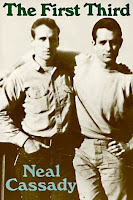
I'm much better off for having sociopaths in my life at one time.  Have you ever read Jack Kerouac's "On the Road?"  Whether you have or haven't, I'll give you some context: JK, in my estimation was a very shy empath, hence the raging lifelong alcoholism.  He found himself drawn to Neil Cassady, a sociopath who probably had some bipolar disorder thrown in as well.  Cassady brought so much fun, spontaneity and wildness into Keroac's life that there literally would be no "On the Road" or Jack Kerouac if it weren't for Cassady. 

Anyway, in all honesty, I'm probably more like Keroac in temperament - a good bit more outgoing, but nonetheless, an introverted empath.  My best friend through much of my childhood and adulthood is the co-founder of a website that's a household name now.  To make a very long story short, he cut me out and threw me away when I was no longer convenient for him in the internet businesses, however I wouldn't trade the experiences and pain for anything.  It's the time in my life that's worth writing a book about (which I have), and if we're really all honest with each other, I would bet that its sociopaths that make life more interesting, and worth writing about in the first place.

By the way Ms. Thomas, I love your book.  I am now a practicing psychotherapist, a profession mostly populated by empaths, and your book provides the greatest insight into sociopaths of anything I've ever read, and I have a stack of books up to my chin about sociopathy.  

If you feel so inclined, I'd love to ask you some questions; I'll start with one: you said in your book that Mormons were some of the sweetest, most loving people you've ever met, or you said that about people at Brigham Young, I believe.  How do you as a sociopath react to sweet, kind people?  Do you see them as rich source for gain and opportunity, or do you enjoy the love you feel, or some combination of both?

My response:

I like sweet people as long as it comes from a genuine place. I think that most people who are self-actualized or able to see the big picture tend to be a little bit sweet and generous because they realize that life is short and there aren't really winners or losers (at least not in the rat race), so why not make friends with your seatmates. And a lot of Mormons are this way. It is like I said in the book -- Mormons believe that we are all spirit brothers and sisters and of course you're going to act more generously with your brothers and sisters than an enemy or non-relative, so there is generally a lot more social capital that I have with Mormons than other people.

But I guess to get more to the heart of your question, I like who I am around them. I'm really impressionable, like a chameleon, so when I'm around goodhearted Mormons, I'm more goodhearted myself. I'm also more willing to take risks and consequently I feel more effective, like I'm leveraging my assets in a way that is clearly making a difference in the lives around me. That makes me feel powerful. And I feel more in control of my own self when I am being that way, like it is my best self. It's one of the times when I feel most engaged in the world. Oddly one of the other times I feel most engaged with the world is when I'm playing a long con or mind game ("ruining people"). 

Monday, April 1, 2013

How to become a (good?) sociopath

I was recently asked whether there are any famous good sociopaths:
Famous good sociopaths? I don't think you would ever say that a sociopath was "good," per se, the same way you might about Mother Theresa, etc. They're always complicated. They can be good in the fact that they aren't bad... they can also be great, without necessarily being good. Is Dick Cheney bad? What about Julius Caesar? Sociopaths often lust for power, which can put them at odds with the people that they rule, but they can also do a lot of good things like keeping governments stable, or fighting off the invading hordes, or being a spy, or whatever else. Does that make them good? I don't think sociopaths have any sort of urge to do good things, just scratch their power-hungry itch. A lot of sociopaths specifically choose to use their powers for good instead of evil, but they're end game is not doing good, it's power or whatever else the sociopaths is after.

I think that a good analogy would be a corporation. There are a lot of corporations that do things that you like, maybe even good things, but the primary motivation is to make a profit. But just because you are trying to make a profit doesn't mean you can't do it by doing things you like, or that you are good at, or that comport with the way you see the world or want the world to see you. I terrorize bullies. Is that good? I help out friends and neighbors for all sorts of reasons. Actually, coincidentally, one of my readers sent this to me recently -- it deals with the idea of not having the same sort of of emotional connections to your actions as empaths do: "a comprehensive beginner's guide to becoming a sociopath." When I read it, I thought all of the good things were things that I might actually do or have already done. My bad things were different, though -- I guess I just have different tastes. But I see what the point of the exercise is -- divorce your normal emotional reactions from certain behavior. I bet it would work. I bet there a lot of things people would want to be a little sociopathic about, like having no fear if you do a lot of public speaking, or not having an emotional connection to food (I would bet the percentage of obese sociopaths is 1%, for purely genetic reasons). But maybe it is difficult to do, like being a little bit pregnant. A little bit anorexic? Or alcoholic? Or blood thirsy?
Join Amazon Prime - Watch Over 40,000 Movies

.

Comments are unmoderated. Blog owner is not responsible for third party content. By leaving comments on the blog, commenters give license to the blog owner to reprint attributed comments in any form.