Showing posts with label guilt. Show all posts

Sunday, May 17, 2020

UPDATE!!! Time change again, sorry! Elsa interview link and Socio/Empath relationship invitation

Sorry about the timing mix-up for the last one, but see the recording here. Zoom messed up the recording a bit so it's just my head, sorry.

Here's the info for next week, also a Sunday morning in Los Angeles, European Sunday evening because our guests are a psychopath/empath couple, going to be on talking about relationship and other stuff.

M.E. Thomas is inviting you to a scheduled Zoom meeting.

Topic: Socio Empath relationship
Time: May 24, 2020 11:00 AM Pacific Time (US and Canada)

Join Zoom Meeting
https://us04web.zoom.us/j/71812284940

Meeting ID: 718 1228 4940
Password: 2PH7GT

Wednesday, March 25, 2020

Religious moral reasoning vs. guilt and getting better

A reader sent me this video of David Woods (Christian psychopath) talking about his religious conversion and how he gets pushback from other Christians because he still doesn't feel guilt.

First, him explaining (I don't think super well) about guilt. 


Second, him talking about how religious people insist that feelings of guilt are a necessary part of religious conversion/salvation. 


I remember when I got judged by some members of my own church, they said that it wasn't necessarily what I had done in the past that made me such a bad person, but that the way that I felt about it. I thought that was a totally anticipated reaction for people to have because my religion does emphasize to a certain point one's change of heart over the ledger recording one's actions in life, whether good and bad. That is, someone might have a change of heart at the last minute death row style and still be just as worthy of salvation as someone who had been "good" their entire life. On the other hand, it's obvious a mental health disorder to not have the same feelings of guilt and to expect someone to feel differently is like expecting gay people to not be attracted to members of the same sex. So I feel like this thoughts vs. action issue is something that many if not all religions have had to evolve their thinking on as we learn more and more the limits of controlling one's thoughts and feelings.

A quick word about guilt. The way I explain a sociopath's lack of guilt is through sense of self. Shame is something that society imposes on you to make you feel bad because you have violated one of their moral constructs. Guilt is a feeling that you have violated your own moral construct or self construct. For instance, if you think of yourself as being an honest and generous person, you may feel guilt if you behave in a dishonest or selfish way. But if you don't think of yourself in any sort of terms, either as being dishonest or honest, you won't ever have experience guilt because you won't ever violate your own self concept. I think sociopaths can regret that things didn't play out differently, and they can even feel remorse when they understand that it was their action that led to things paying out poorly or hurting people that they didn't want to hurt but maybe in a moment of extra impulsivity they did hurt.

Here's his video saying that before a sociopath can get better, he has to see himself as having a problem or being flawed or missing something, rather than seeing sociopathy exclusively as a super power.


Saturday, February 22, 2014

Sociopath police: True Detective

In hacker culture, there are different color "hats" of people. White hat means you basically just ensure that systems are unhackable. Black hat hackers are the opposite, they're out there looking for vulnerabilities and exploiting them. Grey hackers are somewhere in between. Maybe they're breaking laws, but usually it's not malicious, or it's at least for a "good reason," whatever that may be to them.

I started watching True Detective, an HBO television series, and while I wouldn't say that any of the characters seem obviously sociopathic, by the time the mystery gets solved we'll probably realize that somebody is. For our protagonists we have a couple of cops. With giving too much away, the straight man, Marty Hart played by Woody Harrelson, makes questionable moral decisions. At one point his partner asks him what it is like to live a life sans guilt. His partner is not much better. Rust Cohle, played by Matthew McConaughey, is a master of compartmentalizing and situational ethics. Sometimes it seems like he is a deeply moral person (he spends a long scene explaining how unethical it is to bring children into this world, yanking them out of nonexistence), but he is also perfectly willing to kill people should the right situation present itself. He is nihilistic, but congratulates his partner after doing something completely unlawful: "Good to see you commit to something". It's not that he doesn't believe in right and wrong, he just had a different view than almost anyone else you would meet (but could it be just a sociopathic code? And actually, Marty's version of right and wrong is only superficially Judeo-Christian. When it comes down to it, they both have a very flexible sense of morality). Cohle is also insanely cool under pressure, is famed throughout the are for reading people, and is an extremely persuasive guy when he wants to be.

Is one of these characters a sociopath? Both? If they are, they are not black hat. Marty comes off as white hat, gradually seems more gray, and some think he's actually black. Cohle comes off as grey, sometimes creeps darker towards black, and every once in a while says something extremely white. But maybe that is more reflective of what he has chosen to do with his life to give himself some sense of purpose. When Marty asks him what's the point of getting out of bed in the morning if he believes life is meaningless, Cohle answers "I tell myself I bear witness, but the real answer is that it’s obviously my programming. And I lack the constitution for suicide." Sound like something you might say, sociopaths? But this is coming from a man whose definition of honorable behavior would be for human kind to "deny our programming; stop reproducing, walk hand in hand into extinction. One last midnight, brothers and sisters opting out of a raw deal." So I don't know.

Or maybe they're just cops. I heard a rumor once that police get their personality tested for sociopathic traits -- you have to have at least some but not too many. That doesn't surprise me, with police officers being in the top 10 jobs for sociopaths. And even if you weren't a cop, I bet dealing with some of that stuff and the frustrations of not actually being able to do much good in the world would eventually leave you pretty morally jaded.

Whatever these two characters are, the themes, plot devices, and overall flavor of the show are sociopathic and both sociopath and empath readers are likely to relate with one or both main characters, oddly enough. (At least at times.)

My favorite line after raiding the cocaine in the police evidence room, "They really should have a better system for this."


Wednesday, December 18, 2013

A utilitarian view of justice? (part 3)

From the reader again:

I wonder if empathy is a refuge for people who don't believe in god but find utilitarianism too cold as a basis for morality. Or maybe people who have an excess of empathy find it abhorrent to be utilitarian, because it's somehow dehumanizing (ie, being utilitarian means you make an impersonal calculation about the greatest good for the greatest number, as opposed to treating everyone like as individuals)?

I'll share a story with you, which you're also welcome to publish on your blog: I was flying home from Africa a few years ago, and was seated beside a Moroccan woman and her son, on their way to visit family in Montreal. At one point, she asked me about my religion. I told her that I didn't believe in god, which immediately distressed her. I recall her almost frantically reassuring me that I was probably a good person anyway, and that I looked like I loved my family, and so on. I think she was, in her own way, trying to be nice to me and not make me feel bad about my atheism!

Her apprehension of me makes sense, I think.  Her morality derives from God. She doesn't kill, steal, or eat pork because Allah forbids it. Then she meets me, and not only don't I believe in Allah, I don't believe in any god at all. If I don't believe in god, then what stops me from killing and stealing? In her eyes, nothing! And yet I don't look like a monster. How is that possible? What prevents people from being monsters if not god? I think some empaths feel the same way about sociopaths and empathy.

I'm guessing that some empaths think about someone like you, who doesn't experience any emotional empathy, and freak out like the woman beside me on the plane did. Their morality is based on empathy/god. You have no empathy/don't believe in god. Therefore you have no morality. You now become completely unpredictable to them, hence the fear.  You eat pork and don't pray, so maybe you also murder?  You don't cry when others are in pain, so maybe you can kill someone and not feel badly about it?

This last part of the story reminds me a lot of this.

Friday, August 9, 2013

Dealing with mental illness

I really enjoyed this interview between schizophrenic and author Eleanor Longden and author of The Psychopath Test: A Journey Through the Madness Industry Jon Ronson, which is worth reading in its entirety. She talks about how the first voice in her head was just narrating what she happened to be doing, and in some ways she found it calming:

[W]hat research suggests is that voice-hearing (and other unusual experiences, including so-called delusional beliefs) are surprisingly common in the general population. This recognition has led to the popularity of 'continuum models' of mental health, which suggests different traits and experiences are all part of human variation – not strictly categorical in terms of "us and them", "sane and insane", "normal and abnormal". However, I do think life events play a vital role in determining who becomes distressed and overwhelmed and who doesn't. This might include experiences of abuse, trauma, inequality, powerlessness and so on, but it can also include the immediate reactions of the people around you. If you don't have people who will accommodate your experiences, support you, and help you make sense of what's happening, then you're probably much more likely to struggle.

And she wasn't supported or accommodated, instead her friend flipped out, followed by her psychiatrist, until she was institutionalized and the voices got much worse.

[My psychiatrist] really made me feel like a walking inventory of symptoms. This forensic-like scrutiny grew to feel very frightening and de-stabilizing, and was basically sending the message that the only relevant thing about me was my deficits. Not my strengths, not my abilities or resources, just my Bad Brain. I was eventually admitted to hospital (voluntarily), and the impact of that was disastrous because it sealed my perception of myself from someone who was confused, unhappy and frightened into someone with an uncontrollable, carnivorous mental illness. Eventually, I was diagnosed with schizophrenia. The voices (which by this time had multiplied and become much more aggressive) were witheringly contemptuous about this: "You can't even SPELL schizophrenia," one of them said, "So what the hell are you going to do about having it?!"

How did she find her way back?

I don't think there was a single, defining turning point, more an accumulation and fusion of positive changes. Primarily, I was very fortunate to have people who never gave up on me – relationships that really honoured my resilience, my worth and humanity, and my capacity to heal. I used to say that these people saved me, but what I now know is that they did something even more important: they empowered me to save myself. My mum, for example, had an unconditional belief that I was going to come back to her and was willing to wait for me for as long as it took. I also met an amazing psychiatrist, who absolutely didn't subscribe to the idea of me as 'schizophrenic' – or any other label for that matter. "Don't tell me what other people have told you about yourself," he would say, "Tell me about you." 

This led her to a period of profound self-acceptance:

For the first time, I had an opportunity to try and see my voices as meaningful – messages and metaphors about emotional problems in my life – and in turn begin to relate to them more peacefully and productively. I began to understand the voices (as well as my other experiences, like self-injury, anxiety, and paranoid beliefs) in a more compassionate way. Not as symptoms, rather as adaptations and survival strategies: sane reactions to insane circumstances. The voices took the place of overwhelming pain and gave words to it – memories of sexual trauma and abuse, rage, shame, loss, guilt and low self-worth. Probably the most important insight was when I realised that the most menacing, aggressive voices actually represented the parts of me that had been hurt the most – and as such, it was these voices that needed to be shown the greatest compassion and care. Which of course ultimately represented learning to show compassion, love, and acceptance towards myself.
***
But primarily it was when I stopped attacking and arguing with them, and began to try and understand them, and relate to them more peacefully. It was about putting an end to the internal civil war I mentioned earlier, because each of them was part of a whole – me! I would thank them for drawing my attention to conflicts I needed to deal with. I remember one very powerful moment, several years down the line, when I said something like, "You represent awful things that have happened to me, and have carried all the memories and emotion because I couldn't bear to acknowledge them myself. All I've done in return is criticize and attack you. It must have been really hard to be so vilified and misunderstood." There was an immensely long pause before one of them finally responded: "Yes. Thank you."

I found myself relating a lot to this last part -- part of learning to deal with any mental issues is a self-acceptance of yourself, your strengths, and your weaknesses. We all have what Carl Jung called the Shadow, parts of our personality that we would rather not acknowledge about ourselves. But in order for us to become whole, self-actualized human beings, we must not only acknowledge these aspects, but embrace them (see The Tools: 5 Tools to Help You Find Courage, Creativity, and Willpower--and Inspire You to Live Life in Forward Motion for some help on how).

Like most people, I used to ignore my shadow +90% of the time and the other part of the time I became the monster I was afraid I truly was. When I finally cared enough to get better, I knew I couldn't keep doing this, flipping back and forth between the projected-ideal-me and the indulging-every-bad-impulse me. The truth was that both those versions of myself were a distortion, and until I could acknowledge and accept the real me, any changes that I made would be superficial and not-lasting. I saw this same transition in the last season of Dexter, where he finally acknowledges that the "dark passenger" he always blamed for his killing impulse was really just a part of him that he had long ago alienated, and later personified as an external entity. People want me to feel shame for who I am, I can tell. But I'm not going to, because it would make me a much worse person (see also Ted Bundy).

Nobody chooses to be who they are. We make choices and we can define ourselves by our choices if we choose, but there will always be people defining us by other things, including things that we didn't ask for and cannot help. We can't do anything about that either. We just do the best we can and that has to be good enough. As Longden said:

I last heard voices yesterday. They were repeating something I'd read on the internet. The comment was: "I'm going to spoil the ending for you. The ending is – everything's going to be great!"

Saturday, July 27, 2013

Psychopath treatment: a success story

This was an interesting email sent to Jon Ronson, author of The Psychopath Test: A Journey Through the Madness Industry, from a diagnosed psychopath who sought treatment (relatively successfully). Here are selections, links are mine and my comments in brackets:

Four years later, with sessions no less frequent than once or twice a week, I came out of therapy unrecognizable from when I went into it. 

Yes thearapy was transformative, though it is possible to overstate its impacts. I will always see the world through different lenses to much of the rest of the world. My emotional reactions are different, my endowments are impressive in some respects, not so in others, much like other people. 

It is also the case that, being ‘normal’ takes a degree of energy and conscious thought that is instinctive for most, but to me is a significant expenditure of energy. I think it analogous to speaking a second language. That is not to say I am being false or obfuscating, merely that I will always expose some eccentric traits. [I also find it to be taxing to interact with people legitimately because it's a very deliberate choice, a performance of sorts rather than a way of interacting that comes naturally to me.] 

So why am I writing all this to you?

Well, from someone who is both psychopathic and treated, there are many fallacies about psychopaths with which I am deeply cynical. Unfortunately psychopaths themselves do themselves no favors, as the label given to them plays into their ego over generously - ‘If we are born that way’ psychopaths reason, ‘then it is not wrong for us to be as we are, indeed we are the pinnacle of the human condition, something other people demonize merely to explain their fitful fears’. [It's so easy to think this way. It's so hard to acknowledge that the world might be a lot more complicated than you think it is, and people (everybody, really) a lot less stupid and a lot more valuable than you think they are. I had to be trained to see the world differently (by Ann, for those that have read the book).]

We are neither the cartoon evil serial killers, nor the ‘its your boss’ CEO’s always chasing profit at the expense of everyone else. While we are both of those things, it is a sad caricature of itself. 

We continue be to characterized that way, by media, by literature, and by ourselves, yet the whole thing is a sham. 

The truth is much, much more complex, and in my view, interesting.

Psychopaths are just people. You are right to say that psychopaths hate weakness, they will attempt to conceal anything that might present as a vulnerability. The test of their self-superiority is their ability to rapidly find weaknesses in others, and to exploit it to its fullest potential.  

But that is not to say that this aspect of a psychopaths world view cannot be modified. These days I see weaknesses and vulnerabilities as simple facts - a facet of the human condition and the frailties and imperfections inheritent in being human. [I've talked about this here.]

At the same time it is true that my feelings and reactions to those around me are different - not necessarily retarded - just different. It is the image of psychopaths as something not quite human, along with espersions as to their natures, that prevent this from being identified. 

So how to explain these ‘different’ feelings?

Well, lets look at what (bright) psychopaths are naturally quite exceptional at… We are good at identifying, very rapidly, extreme traits of those around us which allows us to discern vulnerabilities, frailties, and mental conditions. It also makes psychopaths supreme manipulators, for they can mimick human emotions they do not feel, play on these emotions and extract concessions. 

But what are these traits really? - Stripped of its pejorative adjectives and mean application, it is a highly trained perception, ability to adapt, and a lack of judgment borne of pragmatic and flexible moral reasoning

What I’m saying here is that although those traits can very easily (even instinctively) lead to dangerous levels of manipulation, they do not have to. 

These days I enjoy a reputation of being someone of intense understanding and observation with a keen strategic instinct. I know where those traits come from, yet I have made the conscious choice to use them for the betterment of friends, aquaintences, and society. People confide in me extraordinary things because they know, no matter what, I will not be judging them. [I particularly relate with this paragraph.]

I do so because I know I have that choice. After years of therapy I am well equipped to act on it, and my keen perception is now directed equally towards myself

Its true that I do not ‘feel’ guilt or remorse, except to the extent that it affects me directly, but I do feel other emotions, which do not have adequate words of description, but nevertheless cause me to derive satisfacton in developing interpersonal relationships, contributing to society, and being gentle as well as assertive. 

Such as statement might tempt you to say ‘well obviously you’re not a real psychopath then’. As if the definition of a psychopath is someone who exploits others for their personal power, satisfaction or gain
***
In the end, psychopaths need to be given that very thing everyone believes they lack for others, empathy; a willingness to understand the person, their drives, hopes, strengths and fears, along with knowledge of their own personal sadnesses and sense of inferiority…As it is, such cartoon, unchangeable, inhuman characterizations offers nothing but perpetuation of those stereotypes. 

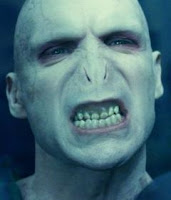
Serial Killers & Ruthless CEOs exist - Voldemort does not. 

Overall I found his experience to be very similar to my own. He sought help at the beginning of his adulthood because he felt like he didn't have control over some of the things he thought and did. He was led through a paradigm shift by a trusted and wise individual (his therapist, my close friend) who first saw and understood him, then met him halfway and spoke his language rather than preaching at him in the foreign language of emotional morality. I don't think this is an easy process. His process took four years. Mine took about two, but of intense focus. I also know of a handful of people who have even gotten there on their own, though, so it definitely is possible. I actually hope that the book is really helpful that way, in terms of helping undiagnosed sociopaths to recognize themselves and also give them a message of hope. It's possible for sociopaths to train themselves to think and act in different ways. We will never be completely fluent or automatic in our empathy or moral reasoning, but with some accommodation we can be not only fully functioning in society, but successful and contributing members of society. 

Sunday, June 9, 2013

Pro-social sociopath (part 3)

Ok, a few more responses about the legitimate foundation of the stigma against sociopaths, and then we'll stop this series.
  • you said you salivate at the thought of ruining people (that's been stuck in my head for a while btw). 
Yes, I do. It's an involuntary reaction to a stimulus, like someone becoming sexually aroused. I once heard a (possibly specious?) statistic that men think about sex every seven seconds. And I bet some of those times are triggered by girls younger than 16 years old. Maybe they even wish that it was ok to sleep with girls that young but since it isn't, they don't. And in any case, they can't control the fact that they are attracted to them. It's just the way they're wired. Similarly, I am also wired to enjoy the aggression inherent in power games. And there are certain contexts in which these power games are particularly useful, like in times of war/diplomacy/debate, just like how there's nothing wrong with sex in the right contexts. It's good for society to have a few people around that don't shy away from conflict but actually enjoy it, particularly as long as you can convince us we're on your team. I understand that people are concerned that I actually "ruin" people in that the person is "ruined". I don't. I have always defined and used the term to refer to power games (ruined in this sense means the same thing as it would in the context of a game, "I've ruined her" = I've beat her in a game). I'm not results-oriented about the ruining. I don't actually want to hurt them. But I still make a game out of it. To use the previous example, a man might flirt with a young girl just to see where it could possibly lead without actually intending to sleep with her. Similarly, I will sometimes exercise small degrees of influence over people to see how quickly I can acquire even larger degrees of influence over them. I don't actually use that influence to intentionally or malicious harm them (unless that's what they're asking me to do).

  • and that you've never killed anyone but very likely could. how can you not think that would make people hate sociopaths?

Yes, I understand, it would be scary if I had actually ever said that I "very likely could" kill someone or if a significant percentage of sociopaths are killers (I don't know what percentage of sociopaths are killers, and I don't think anyone does, but it can't be that high because there simply aren't that many murders committed). I think what I said was roughly (and even this was taken out of context): "is it possible that I would kill someone? I don't think I would, but it's possible." This is true. In my mind pretty much anything is possible -- I'm naturally very open-minded about what is and is not possible and my educational background has also led me to believe that it is foolish to not believe that it's within the realm of possibility that killing (either as a perpetrator or victim) could be part of my life -- or having a child with down syndrome, or becoming an amputee, or any number of unusual and unlikely but very possible events. I actually think it's weird that people assume that they're much more likely to be the victim of killing than the perpetrator, particularly because if most killers have only killed once, the odds of killer/killed happening to you are not so different. I wish more people would acknowledge that they too could be killers, given the right circumstances, then maybe they would take appropriate precautions to avoid things that might trigger any latent violent tendencies, like I do and have done since the DC metro worker incident from the book. If you have never experienced anything approaching a murderous rage, good for you but I fear you are in the minority of the population and there's no guarantee that you won't ever ("she always seemed so mild-mannered..."). But despite sometimes feeling like or wishing that I could "stick it to" someone, I have no real history of non-consensual violence and I don't really have the skills for killing someone even if I wanted to. My guess is that there is a greater chance of being struck by lightning than being killed by a sociopath and I am certain that there is a much greater chance of being the victim of violence perpetuated by a non-sociopath than by a sociopath. Do you know what kills much more frequently than sociopathy? Love kills. Emotions kill. It happens so often that we have a separate version of homicide for it, voluntary manslaughter. If you really want to decrease your likelihood of being murdered, you'd never get married, disown your family, never have kids. But of course this is stupid to do when the chance of getting murdered by anyone is so low and much lower than dying doing any number of other activities we still willingly engage in (driving automobiles, working, biking, etc.)

  • You are as repulsed by the fat girl as anyone else, but you see an opportunity to use her and have no qualms against taking it.

No, let me be very clear -- I am not repulsed. The fat woman does not bother me. Not only am I not repulsed, I don't understand why your feeling of repulsion and your mind-blindness are so strong that you can't imagine anyone not feeling repulsed to the point that you keep insisting that I am. I am not you. And your continued projection of your own failings unto me (along with a laundry list of failings that you imagine me to have) are telling as to how and why there is such a negative (and still unfounded, as far as this recent exercise is concerned) stigma against sociopaths. Why would her appearance offend me at all? I'd love to see someone even attempt to come up with a rational reason why, and yet you all conveniently write off this particularly ugly and antisocial empath trait as being "trivial" or necessary to the survival of humanity by ensuring that there be social conformity. Conformity as to what? Fit of clothing? Is it also ok to make everyone conform to the same religion? Same political beliefs? No? And yet, you all think there's an incredibly compelling reason to shame a fat person out of completely innocuous behavior. This is nonsense. It's irrational and hurtful and it's so common that you can't even imagine what humanity might look like without it. I don't think this example is trivial, rather I think this example and your reactions to it clearly illustrate how convinced empaths seem to be that their fecal matter doesn't stink.

  • And when you've used her up, when her value is gone, there's no marriage contract, no division of property, just a social umbilical cord to cut which thrusts her back out into the world, cold, naked and alone.

This is a funny thing to say, especially when the actual marriage success rate is 50%. I guess empaths are all selfish and self-interested? I don't think I've met anyone who consistently acts outside their own self-interest, and I don't think we'd want them to, or at least rational self-interest is the basis of capitalistic economies.

  • The person who commits a crime in a moment of temporary madness, or a blackout, is considered to be less dangerous than the one who knowingly and willingly commits an identical crime. The former is not held responsible, and in less need of reform. The latter is responsible for his actions, and heavier penalties are necessary to discourage future crimes.

It's not clear that sociopaths are actually deterred by heavier penalties. In fact, there has been substantial evidence suggesting that sociopath do not respond in the same way to punishment (but they do respond to incentives). If the idea is to actually prevent sociopaths from doing criminal acts, a one-size fits all method is not at all optimal. And I don't believe that sociopaths are incapable of reform. Sociopaths may not respond well to the current methods of prisoner reform, but we are far from having exhausted every possible option in terms of attempted reform of criminal sociopaths.

  • Sociopaths do not feel guilt and will never atone, and thus commit social crimes in perpetuity without any legal or social recourse. The solution, then, is to identify people who are sociopaths and ostracize them, strip them of social privileges and cast them out.

Sociopaths don't need to feel guilt/atone to choose to behave in socially beneficial ways. And your solution seems difficult to execute. Historically, what typically happens when you disenfranchise a group of people and treat them as less than? Does it work out well? No, because after they are no longer invested in your society (nothing to lose), they will have every incentive to tear it down (French Revolution, and really every other revolution, terrorism, etc.) And if we're imprisoning people based on their status (and an inborn genetic propensity at that), then we're opening the door to any number of atrocities committed against types of people that we might, in all our infinite and flawless wisdom, consider a net loss to society -- disabled people, mentally sick, even poor children who, just like sociopaths, are statistically more likely to grow up and become criminals. And if we're going to eliminate things that seem to cause problems, let's also get rid of religion because it makes people bigots and terrorists, and children in general because killers have to come from somewhere, and money because people don't like that other people have more of it and sometimes they commit crimes or murder for it, corporations, and a slew of other really great ideas for social reform. A certain degree of conformity is beneficial to society, but absolute conformity is absolute death.

  • I mean, sociopaths, almost all of them, have antisocial behaviors. And you are asking why humans, who life together, who organize in a society, stigmatize those who have antisocial behaviors?

My point is that everyone has antisocial behaviors. The sociopath's antisocial behaviors may seem uniquely distasteful to you, and it may be difficult for you to acknowledge your own failings, but it's not at all clear that sociopaths as a class of people are a net loss to society. You may have an intuition that this is true, but your intuitions appear to be tainted by your visceral negative reactions to the very idea of sociopaths. So I'm not just going to take your word for it on sociopaths being pure evil, and I don't think any reasonable person should. If your beliefs are really based in fact, they should hold up to even a modest degree of scrutiny. Otherwise, “that which can be asserted without evidence, can be dismissed without evidence." I'm not saying that people can't hate sociopaths -- they can and they do and I'm sure nothing will change that, particularly for some of you. But sociopaths are here, we're queer, and if you want to make our lives worse in some way, at least acknowledge that you are really just blindly enforcing your own personal and subjective set of aesthetic preferences of what humanity should look like onto sociopaths in the same way that you bully fat girls in a tube top. And it's not even effective -- as much as society shames fat girls in tube tops, they keep doing it.

  • A clue - empaths, and people of this ilk, especially in a group, as you know, are a thousand times as intelligent as any sociopath.

One more outrageous claim to add to the pile of irrational outrage. But this has been incredibly enlightening to me. I am pretty sure I now know where the intense stigma and dislike for sociopaths comes from, but unfortunately it's not anything that any of you seem to be able to put into words. Correct me if I'm wrong.

Sunday, April 7, 2013

Sociopath quotes: guilt

"Guilt? It's this mechanism we use to control people. It's an illusion. It's a kind of social control mechanism -- and it's very unhealthy. It does terrible things to our bodies. And there are much better ways to control our behavior than that rather extraordinary use of guilt."

-- Ted Bundy

Monday, March 25, 2013

The Unburdened Mind

This is one of the most balanced, accurate depictions of sociopathy/psychopathy I have seen written by a non sociopath, and the comments are hilarious. Highlights from the article:
Many potential psychopaths might not even realize they have the condition, nor has there traditionally been any easy way for others to recognize them.
* * *
The psychopath does not merely repress feelings of anxiety and guilt or fail to experience them appropriately; instead, he or she lacks a fundamental understanding of what these things are.
* * *
Arriving at a disaster scene, a psychopath would most likely gather to watch with the rest of the crowd. He might even lend assistance if he perceived no threat to his own safety. But he would feel none of the panic, shock, or horror of the other onlookers—his interest would fall more on the reactions of the victims and of the crowd.
* * *
Despite this emotional deficiency, most psychopaths learn to mimic the appearance of normal emotion well enough to fit into ordinary society, not unlike the way that the hearing impaired or illiterate learn to use other cues to compensate for their disabilities. As Hare describes it, psychopaths “know the words but not the music.” One might imagine that such a false and superficial front would be easily penetrated, but such is rarely the case, probably because of the assumption we all tend to make that others think and feel essentially the same way as ourselves. Differences in culture, gender, personality, and social status all create empathy gaps that can seem almost unfathomable, but none of these is as fundamental a divide as the one that exists between an individual with a conscience and one without. The psychopath’s psychology is so profoundly alien to most people that we are unable to comprehend their motives, or recognize one when we see one. Naturally, the industrious psychopath will find this to his advantage.

Some psychologists go so far as to label the psychopath “a different kind of human” altogether. Psychopathy has an environmental component like nearly all aspects of personal psychology, but its source is rooted firmly in biology. This has caused some researchers to suspect that the condition isn’t a “disorder” at all, but an adaptive trait. In a civilization made up primarily of law-abiding citizenry, the theory goes, an evolutionary niche opens up for a minority who would exploit the trusting masses.

This hypothesis is supported by the apparent success many psychopaths find within society. The majority of these individuals are not violent criminals; indeed, those that turn to crime are generally considered “unsuccessful psychopaths” due to their failure to blend into society. Those who do succeed can do so spectacularly. For instance, while it may sound like a cynical joke, it’s a fact that psychopaths have a clear advantage in fields such as law, business, and politics. They have higher IQs on average than the general population. They take risks and aren’t fazed by failures. They know how to charm and manipulate. They’re ruthless. It could even be argued that the criteria used by corporations to find effective managers actually select specifically for psychopathic traits: characteristics such as charisma, self-centeredness, confidence, and dominance are highly correlated with the psychopathic personality, yet also highly sought after in potential leaders.
* * *
A lack of empathy does not necessarily imply a desire to do harm—that comes from sadism and tendencies toward violence, traits which have only a small correlation with psychopathy. When all three come together in one individual, of course, the result is catastrophic. Ted Bundy and Paul Bernardo are extreme examples of such a combination.
* * *
The reasons we look up to these conscience impaired people are unclear. Most likely it has something to do with the confidence they exude, the ease they seem to feel in any situation—a trait that comes easily in someone essentially incapable of fear or anxiety. Maybe we’re easily suckered in by their natural glibness and charm. Or maybe on some level we envy the freedom they have, with no burden of conscience or emotion.

Monday, July 9, 2012

Guilt

I'm still learning a lot about myself. For instance, I was prompted recently to think about "guilt." A reader writes:
Sometimes I feel what I think may be guilt, but there's always a metaphorical voice in the back of my head telling me, "No, you only feel that way because your image was tarnished." That "voice" is incredibly difficult to pay attention to, by the way. I feel a horrible feeling whenever I do something that hurts someone and it can be linked back to me. If there is no link to me, I don't feel anything. It's very hard for me to differentiate between this and guilt, and I've frequently used it to justify my own humanity. But why don't I feel such things if nobody knows who caused it? It can't be guilt. I only care when there are consequences for me.
I reply:
That is interesting how you feel bad only when you are caught, essentially. I mean, it's a trite phrase -- "he's only sorry he got caught" -- but it is so true for me. I can actually feel really really badly about things that I got caught for, for whatever reason. But the phrase doesn't fit exactly. It's not like I feel disappointed that I couldn't get away with it. I just feel ... out of sorts. I feel like the world is an ugly place where I don't belong. That is what makes me feel bad. Definitely not, "oh, poor person I hurt." It's more like, "poor me for having to live in this ugly world and deal with this." This happened to me very recently when I stole/borrowed something from my neighbor, hoping she would never find out before I returned it. She did find out, though, and confronted me about it. Or she at least asked me about it and I didn't know what she knew so I just came clean, but spun a story of emergency, etc., figuring that would be better for me than to be caught in a lie. But she wouldn't have it. She threatened to call the authorities. Now that seemed like an overreaction by anyone's standards, but for some reason it deeply disturbed me. I think I realized how vulnerable I am, how hated I am just by virtue of what I am. I didn't really think about it at the time, but what you wrote really made sense to me. I wouldn't have felt the least tinge of guilt if I had never been caught, but being caught made me feel all sorts of guilt, or what felt like guilt at least. Maybe it was just regret.

Sunday, April 1, 2012

Shaming (part 2)

I have written before about shaming here and here.  A reader responded with this email:

This is the malignant narcissist again.

I'm exploring the shame/sociopathy thing. I thought you might have some thoughts on it.

I was hungry and tired as I shopped at a big-box discount store. There was just one counter open. I wanted to check out. There weren't any customers in line. Then I saw two fat women pull up with their cart to the counter, ahead of me. They were starting to unload. It was clear it would take a long time for them to put the contents of their cart on the belt. I decided that I just didn't want to wait.

The belt was quite long - there was a 10 foot gap between the women unloading their stuff and the clerk. Rather than wait behind them or ask them if I could go ahead, I impulsively ran up to the cashier (10 feet ahead of the fat women) and handed her my stuff. She started to ring me up.

After a few seconds, the women behind me figured out what had happened. They wound up taking their stuff off the belt and moving to another clerk (also fat). They complained to themselves and the clerk about my behavior. As I heard them talking, I started to feel a bit ashamed.

As I left, one of the women I'd bothered said, "thanks for the chivalry."  I said to her, "you're welcome."  I was feeling nasty. Perhaps in the future I'll take a tip from you and giver someone like her a rage-filled glare.

When it was all over, I was a bit shocked at how selfishly I'd behaved. But then I realized, I didn't feel any guilt. I still don't - I don't figure that I did anything wrong. I didn't want to wait behind the hippos as they unloaded their stuff.

 If I'd done something illegal, they'd have called the police. If I'd done something against the rules of the store, the store personnel would have done something - but they did nothing. In the end, all that happened was that I was rude and some fatties got some ruffled feathers. I've broken laws in public before. Sometimes people say something to me about them. When that happens, I tell them that if they don't like it, they should call the police. In the same vein, if the women don't like what I'm doing, they should call the police or talk to the store management.

Later I reflected on things. My action was a bit unfortunate. Perhaps I should feel some guilt about the action (I don't). I do feel a bit like a bad person - but only because they called me on it. Had they not noticed, had they been blind or had I been anonymous, I just wouldn't have cared.

I figure this case is an example of why people assume sociopaths are a danger to society. If everyone acted the way I do, our civilization would fall apart.


I responded: I am usually am not full of rage unless I feel like I have been attempting to comply with the strictures of good social behavior and people still give me a hard time about things.

I very much identify with this thought that if you weren't called on it, you wouldn't feel badly at all.  Although I am starting to wonder more and more if neurotypicals also identify with this feeling and it's not unique to the "dark triad".  Shall we publish it and see what they say?

Monday, October 31, 2011

Regret vs. remorse

I have actually forgotten where I got this from, but I thought it was an interesting etymological explanation of what I have always intuited about regret vs. remorse.
I always think of connotation - REMORSE "1325–75; Middle English < Middle French remors < Medieval Latin remorsus, equivalent to Latin remord ( ere ) to bite again, vex, nag ( re- re- + mordere to bite) + -tus suffix of v. action, with dt > s; see mordant" Defined as a "deep and painful regret for wrongdoing; compunction." Remorse seems to follow a morally wrong decision. REGRET "1300–50; Middle English regretten (v.) < Middle French regreter, Old French, equivalent to re- re- + -greter, perhaps < Germanic ( compare greet2 )" Defined as alternatively "a sense of loss, disappointment, dissatisfaction, etc" or "a feeling of sorrow or remorse for a fault, act, loss, disappointment, etc." It is interesting that regret's second definition denotes a relationship with remorse but I have always thought that regret follows a decision that can be morally wrong but might just be a function of maturity. We have remorse for something that is unequivocally wrong and we feel regret for something that could be wrong but might just be stupid.

For me, regret means either feeling bad about something I get caught at OR a missed opportunity. Remorse is more connected to morality and is when I feel bad because I know what I have done is wrong (according to my conscience and internal compass).
I agree particularly with the last paragraph--that regret is wishing things could have gone differently, and remorse seems to be associated with a sense of guilt.
Join Amazon Prime - Watch Over 40,000 Movies

.

Comments are unmoderated. Blog owner is not responsible for third party content. By leaving comments on the blog, commenters give license to the blog owner to reprint attributed comments in any form.