Showing posts with label irrationality. Show all posts

Monday, March 30, 2020

Covid-19 and Reactionary thinking

I've been tweeting a lot more. Probably because I think the world has gone a little sideways, but mostly not because of the virus. I know in times of uncertainty people have a tendency to be more fearful (I have noticed people struggle with uncertainty). Others will try to profit and superimpose their previously held viewpoints on the situation in a way that is more opportunistic and transparent than I am used to seeing. I thought this was particularly true of this NY Times piece about how as early as 2006, the United States federal government found that it was 700,000 ventilators short in the event of a pandemic. Rather than just buy more ventilators, it tried to contract with medical device companies to produce some very cheaply. Companies submitted buds, but it wasn't until 2010 (a few months after the H1N1 outbreak, so already too late for the next pandemic) that a contract was signed with a company. So it took  4 years of the government dicking around from realizing it needed 700,000 ventilators to signing a contract to procure those ventilators. Remember, design and production are still years away. 

The lowest bid was for 15% the going rate of ventilators by a very small, unproven company. Why 15%? Apparently the government really didn't feel like this emergency surplus warranted paying retail rates. To me, this is a little like (as I tweeted) leaving my car on the side of the road gasless and waiting until gas prices drop below $3 before I gas it up again. Like knowing that you don't have fire extinguishers for your 50 story building, but waiting until they go on sale for 85% off until you buy any. This alone is not the craziest part of the story to me, in terms of shocking government decisions.

$6M government dollars later, the contracted for medical device company got stalled at FDA approval in 2012 (apparently because it didn't work on infants), but the NY Times article tried to make it seem like the failure was because the company was intentionally purchased by a bigger company to stifle innovation (no sources were named to support this proposition). The contract was finally cancelled in 2014.

But now 8 years after it realized it was short 700,000 ventilators and not being able to get a single one (at least according to the NY Times), instead of just buying ventilators on the open market the federal government again chooses to contract with a medical device producer, Philips. I can't really tell from the gaps in the NY Times timeline, but I think that contract happened around 2014. Philips has also failed to produce any usable ventilator in the past 6 years. Why? The FDA: "It wasn’t until last July that the F.D.A. signed off on the new Philips ventilator, the Trilogy Evo. The government ordered 10,000 units in December, setting a delivery date in mid-2020."

The NY Times take on this, with zero facts to support their argument:

The stalled efforts to create a new class of cheap, easy-to-use ventilators highlight the perils of outsourcing projects with critical public-health implications to private companies; their focus on maximizing profits is not always consistent with the government’s goal of preparing for a future crisis.

Whoa kay! Sounds like a defamation lawsuit to me, especially since Medtronics (the parent company of the original contracting party) is not in any way a public figure under the Supreme Court standard from NY Times v. Sullivan and its progeny.

People have a lot more spicy takes nowadays. The arguments I see most from though-leaders are that these circumstances call for extreme measures, and don't worry we can just trust them that what they're saying is necessary and if we don't comply we lack empathy and are team virus and should be fined or imprisoned. At least, that's according to my local subreddit that is saying that surfers who want to still surf during this pandemic are "entitled fucking children" lacking in "empathy".

I've seen other people savagely (gleefully, I think) tear apart Richard Epstein after this New Yorker interview. Not his ideas, mind you, just him, or perhaps in fairness laser focusing on some ideas they disagree with and ignoring his other points.

I guess that's the most common thing I have seen that scares me, much more than the virus -- that people are no longer willing to attack other people's ideas, they seem to be only attacking people. And the people they attack are people who do not share the same "feelings" they do about what is happening.

Because the truth is even the data we have is extremely all over the place (even when you exclude the the Chinese data and try to account for differences in culture, etc.). If you hear anyone say that they know what is happening, you can know for a fact that there is no definite evidence to prove practically anything. We are in the extreme position of flying blind on almost every level.

So why attack each other personally and not the ideas? And here's what I mean using Epstein as an example. I think the main issue that people seemed to take with Epstein is that he said that viruses evolve, and tend to (1) evolve in response to their hosts responses and they (2) evolve to weaker strains, which I don't know anything about but a quick google turned up innumerable sources that support number 1, including this peer reviewed article from two years ago in the journal of Molecular Biology and Evolution. And again without spending too much time on this issue, I found in support of number two this and this. But read the interview, it's crazy how much of a set-up hit piece it is and how cherry-picked their own experts are to contradict Epstein. They knew ahead how they wanted to discredit Epstein, not just his ideas but to discredit him as a person. Why? Because Epstein made the mistake of asking what is the basis for all of this non-democratic action from the executive branches in this country:

Well, I’m saying in effect, by this particular point—this is not the medical side—is after you start declaring emergencies you have time for reflection and adaptation and modification, which you don’t have in a fire case. So the political point is one which essentially says, when you see governors of three major states putting out statements that their experts have said this, that, and the other thing is a result, and you don’t see the studies and you can’t question the assumption, I regard that as a serious breakdown in the political process. So my view on that particular point is I’d like to know which of these studies they’re relying on. If it’s the New York Times studies, then I thought that that study was mistaken for the reasons that I was trying to give you a moment ago, which is that as the virus becomes more apparent, adaptive responses long before government gets involved become clear.

The craziest thing is he doesn't even criticize them for acting with urgency, he just says that now that we have some down time and this is the new normal, maybe they could do us the favor of explaining what models and assumptions they're basing their decisions on.

I want this too. I'm tired of being subject to mob mentality throughout with people who appear to be (at least to me) fear driven and not thinking as well as I am used to seeing from them, but instead being reactionary and making knee-jerk decisions with lasting consequences on the spur of the moment with seemingly little before-thought. But even some of that, that's ok that's predictable, that's fine. Pandemics, I get it. But what about after thought, i.e. thought after we've jumped to decisions and conclusions about what we think is going on or should be going on? What about allowing new ideas in? What about challenging what we think we know? What about attacking ideas instead of people? What about using data instead of feelings? Can we at least agree that those precepts don't go out the window in an emergency?

Hopefully another we can get back some humility to question our own thinking and that of our leaders, lest we turn out like Hungary.

Thursday, March 6, 2014

Manipulation 105

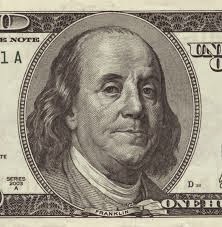
How to turn a hater into a fan, Benjamin Franklin style, from David McRaney's "You Are Not So Smart: A Field Guide to the Brain's Guile". First he talks about how our flawed perception of the world provides ample opportunity for us to be fooled:

The last one hundred years of research suggest that you, and everyone else, still believe in a form of naïve realism. You still believe that although your inputs may not be perfect, once you get to thinking and feeling, those thoughts and feelings are reliable and predictable. We now know that there is no way you can ever know an “objective” reality, and we know that you can never know how much of subjective reality is a fabrication, because you never experience anything other than the output of your mind. Everything that’s ever happened to you has happened inside your skull.

Second, the Benjamin Franklin method of messing with another person's mind:

Franklin set out to turn his hater into a fan, but he wanted to do it without “paying any servile respect to him.” Franklin’s reputation as a book collector and library founder gave him a standing as a man of discerning literary tastes, so Franklin sent a letter to the hater asking if he could borrow a specific selection from his library, one that was a “very scarce and curious book.” The rival, flattered, sent it right away. Franklin sent it back a week later with a thank-you note. Mission accomplished. The next time the legislature met, the man approached Franklin and spoke to him in person for the first time. Franklin said the man “ever after manifested a readiness to serve me on all occasions, so that we became great friends, and our friendship continued to his death.”
***
When you feel anxiety over your actions, you will seek to lower the anxiety by creating a fantasy world in which your anxiety can’t exist, and then you come to believe the fantasy is reality, just as Benjamin Franklin’s rival did. He couldn’t possibly have lent a rare book to a guy he didn’t like, so he must actually like him. Problem solved.
***
The Benjamin Franklin effect is the result of your concept of self coming under attack. Every person develops a persona, and that persona persists because inconsistencies in your personal narrative get rewritten, redacted, and misinterpreted. If you are like most people, you have high self-esteem and tend to believe you are above average in just about every way. It keeps you going, keeps your head above water, so when the source of your own behavior is mysterious you will confabulate a story that paints you in a positive light. If you are on the other end of the self-esteem spectrum and tend to see yourself as undeserving and unworthy [and] will rewrite nebulous behavior as the result of attitudes consistent with the persona of an incompetent person, deviant, or whatever flavor of loser you believe yourself to be. Successes will make you uncomfortable, so you will dismiss them as flukes. If people are nice to you, you will assume they have ulterior motives or are mistaken. Whether you love or hate your persona, you protect the self with which you’ve become comfortable. When you observe your own behavior, or feel the gaze of an outsider, you manipulate the facts so they match your expectations.

This is why volunteering feels good and unpaid interns work so hard. Without an obvious outside reward you create an internal one. That’s the cycle of cognitive dissonance; a painful confusion about who you are gets resolved by seeing the world in a more satisfying way.

By the way, a while ago I posted something about Benjamin Franklin possibly being a sociopath, and people vehemently disagreed:

Like many people full of drive and intelligence born into a low station, Franklin developed strong people skills and social powers. All else denied, the analytical mind will pick apart behavior, and Franklin became adroit at human relations. From an early age, he was a talker and a schemer, a man capable of guile, cunning, and persuasive charm. He stockpiled a cache of secret weapons, one of which was the Benjamin Franklin effect, a tool as useful today as it was in the 1730s and still just as counterintuitive.

Maybe he was not a sociopath, but he certainly had many sociopathic traits. 

Thursday, January 16, 2014

How to Manipulate People

This was a good Lifehacker article on how to manipulate people (quick read, worth reading in its entirety). The following are the headings from the article along with my thoughts on each suggestion:

  • Emotion vs. Logic: Appealing to emotion rather than logic in manipulation is a little bit of a no brainer. Not only do most people respond better to emotion than logic, irrational people often best (only?) respond to fear
  • Overcome Trust Issues and Heal Doubt: Building trust with your target is often critical, see number 2 here (does Lifehacker read this blog? or have a sociopath on staff cluing them in?)

Also, beware the anti-seducer, for they cannot be manipulated.

Wednesday, January 30, 2013

Seeing what you want to see

I studied economics for a time. I was introduced to behavioral economics and how the heuristics that help us deal with day to day problems can also frequently lead us astray. I had understood for a long time that people often self-deceived, but even I was surprised by the depth and breadth of the way we misperceive the world (me included). I learned the lessons of decisionmaking and rationality and tried to become more rational myself. I have since noticed that many of my friends who did fine understanding the concepts but lacked the humility or insight to see an application in their own lives.

My friend I mentioned earlier is a good example. He is so afraid of making a bad decision that he avoids making them until they are made for him. That or he waits until his fear and panic of making the decision cause him to take action, any action at all, but all in a fog of willful ignorance -- pretending that certain facts don't exist or (intentionally?) misrepresenting probabilistic outcomes in his mind. All of this is done in an attempt to shield himself from self-hatred or acknowledging certain basic truths about the world that he would rather ignore. I see this sort of ex post self-justification happen in the comments section of this blog from people who are doomed to repeat past mistakes because they refuse a sense of responsibility about their own destiny.

It's a good example of seeing what you want to see and the harm that can come from it. I actually advise people to not even form a belief if they can -- the temptation to anchor their future assessments or see all new information through the distorted lens of whether or not it confirms that belief is just simply too high.

Even if people get the probability correctly, they often don't understand what that means. It's one thing to say there's a 1% of getting caught stealing a mobile phone, but many people have trouble understanding that means if you steal 100 phones you will statistically get caught once. Instead they act as if anything less than 5% means never going to happen no matter how repeatedly they engage in it. Which is why I liked this recent article in the NY Times about understanding low probability risks. It's worth reading in its entirety, here's a teaser story:


I first became aware of the New Guineans’ attitude toward risk on a trip into a forest when I proposed pitching our tents under a tall and beautiful tree. To my surprise, my New Guinea friends absolutely refused. They explained that the tree was dead and might fall on us.

Yes, I had to agree, it was indeed dead. But I objected that it was so solid that it would be standing for many years. The New Guineans were unswayed, opting instead to sleep in the open without a tent.

I thought that their fears were greatly exaggerated, verging on paranoia. In the following years, though, I came to realize that every night that I camped in a New Guinea forest, I heard a tree falling. And when I did a frequency/risk calculation, I understood their point of view.

Consider: If you’re a New Guinean living in the forest, and if you adopt the bad habit of sleeping under dead trees whose odds of falling on you that particular night are only 1 in 1,000, you’ll be dead within a few years. In fact, my wife was nearly killed by a falling tree last year, and I’ve survived numerous nearly fatal situations in New Guinea.

Saturday, July 7, 2012

Quotes: Emotional irrationality

“I can calculate the motion of heavenly bodies but not the madness of people.”

Isaac Newton
Join Amazon Prime - Watch Over 40,000 Movies

.

Comments are unmoderated. Blog owner is not responsible for third party content. By leaving comments on the blog, commenters give license to the blog owner to reprint attributed comments in any form.